
Yukimura Kusunoki
Yukimura Kusunoki |
|
|---|---|
 |
|
| Kanji | 楠 幸村 |
| Rōmaji | Kusunoki Yukimura |
| Statistics | |
| Gender | Female |
| Age | 16 |
| Job | High School Student Student Council Treasurer |
| Class | 1-1 |
| School | St. Chronica’s Academy |
| Actors | |
| Japanese | Nozomi Yamamoto |
| English | Ashleigh Domangue |
| Debut | |
| Anime | Episode 4 |
| Manga | Chapter 5 |
Yukimura Kusunoki (楠 幸村, Kusunoki Yukimura) is a character in the Boku wa Tomodachi ga Sukunai series. She is introduced as a quiet classmate who initially stalks Kodaka Hasegawa out of admiration for his perceived delinquent image. Her first encounter with the Neighbor’s Club leads to confusion regarding her gender, as her feminine appearance contradicts her insistence that she is male.
Personality
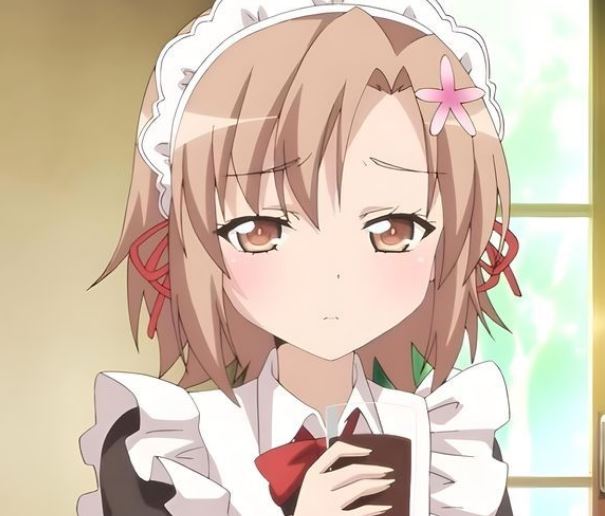
Appearance in Anime
Yukimura is portrayed as polite, gentle, and deeply insecure, often displaying low self-esteem. She places immense value on being useful to Kodaka, to the point of threatening seppuku whenever she feels she has failed him. Her devotion to Kodaka stems from her admiration of his perceived masculinity, which she longs to emulate.
She is also highly gullible, easily manipulated by Yozora into wearing feminine clothing, becoming the club’s servant, and later being dressed in a butler uniform. Despite this, as the series progresses, Yukimura gradually gains confidence and even develops the boldness to make sarcastic remarks toward Kodaka, surprising those who know her as unfailingly respectful and submissive.
Her formal and polite speech is reflected in her use of watakushi (私, わたくし) as her personal pronoun, a highly sophisticated and reserved choice. Yukimura rarely expresses emotion openly, often appearing calm even in stressful situations, such as when the club rides the “Black Dragon” roller coaster. However, subtle signs such as nervously chanting sutras throughout the ride or showing unease in a haunted house reveal that she does feel fear, but struggles to show it outwardly.
Dedicated to serving Kodaka, Yukimura faithfully brings him food, manga, and attends to his requests with almost obsessive diligence, often taking things to unnecessary extremes. She also displays an unusual fascination with samurai culture, eagerly connecting even trivial topics to the values and traditions of warriors, much to the amusement (or exasperation) of her clubmates.
Although Yukimura originally joined the Neighbor’s Club solely to serve Kodaka, with no personal desire for friendship, her time with the group slowly changed her. By spending time with the others during outings and casual gatherings, she began to open up and display warmth toward her peers. Her kindness and soft-spoken nature allowed her to connect more easily with others, particularly Aoi Yusa, with whom she eventually becomes sociable.
Appearance
Yukimura has light brown, shoulder-length hair and matching brown eyes, giving her a soft and delicate look that contrasts with her attempts to appear masculine. While at school, she is usually seen in the standard male uniform, which she insists on wearing to maintain her self-proclaimed identity as a boy. After school hours, however, she is often dressed in a maid uniform provided by Yozora. This outfit consists of a black dress with a white apron, accented with a red bow tie and a white barrette decorated with black strings tied into triangular shapes on each side.
Once her biological sex is revealed, Yozora changes her attire once again, this time placing her in a butler uniform. The outfit includes a black tuxedo with a necktie, matching pants, and white gloves. With this look, Yukimura also begins tying her hair back, leaving three locks hanging in front two on the right and one on the left. Despite the masculine clothing, she retains a touch of femininity by wearing a single pink flower hair clip, even with the butler attire.
Beyond these uniforms, Yukimura has been seen in other outfits. At one point in Volume 6, she wore Yozora’s clothes, and for swimming, she owns a pink bikini top paired with a mini-skirt pareo design, as well as a traditional fundoshi. These varied outfits reflect both her gullibility often wearing whatever others decide for her and her gradual transition from forced masculinity to a more balanced presentation of her true self.
Abilities
Intelligence
Yukimura demonstrates impressive knowledge when it comes to Japanese history, particularly the Sengoku and Edo periods. She is able to recount in detail the lives of famous generals and their retainers, showing excellent memorization skills and a strong enthusiasm for the subject. This passion, however, often blinds her to broader contexts; when faced with world history, she struggles considerably. Yukimura frequently confuses unrelated figures and eras famously believing that Alexander the Great was simply another name for Oda Nobunaga showing that her expertise is very specialized and not well-rounded.
Relationships
Kodaka Hasegawa
Yukimura deeply admires Kodaka and holds him in the highest regard, believing him to embody the essence of true masculinity. To her, Kodaka represents an ideal figure: someone respected and feared at school, surrounded by many girls, and someone who lives freely by his own rules. Out of reverence, she addresses him as Aniki (兄貴, “Big Brother”), a term often used in yakuza circles to express loyalty and respect for a superior. Her devotion to Kodaka borders on blind admiration, as she takes his words and actions as guidance on how to live her life.
Yozora Mikazuki
Despite frequently being the victim of Yozora’s manipulative schemes such as being tricked into wearing a maid or butler uniform Yukimura remains respectful toward her. She sees Yozora as a senior and potential role model, referring to her as Anego (姉御, “Big Sister”), another yakuza-derived honorific. Yozora, on the other hand, views Yukimura partly as a rival in love and partly as a convenient pawn, though Yukimura herself never seems to realize the extent of Yozora’s manipulation.
Sena Kashiwazaki
Yukimura treats Sena similarly to Yozora, addressing her as Anego out of respect for her seniority. While she initially assumed Sena to be dignified, she later became surprised by Sena’s perverse side, particularly when Sena forced her to recite lines from erotic games. Rather than condemning her, Yukimura interpreted this behavior as an unusual form of boldness, adding to her admiration of Sena’s confidence.
Rika Shiguma
Yukimura and Rika share a relatively smooth relationship, though their interactions are limited compared to other members of the Neighbor’s Club. Early on, Rika attempted to explain the biological realities of Yukimura’s sex, emphasizing human anatomy to prove she was female. Ultimately, Rika decided to respect Yukimura’s choice to pursue her ideal of “manliness” and continues treating her as a boy. As the youngest members of the club, Yukimura and Rika tend to get along without much conflict, often siding with one another when the seniors’ quarrels intensify.
Etymology
The name Yukimura (幸村) can be read as “fortunate village” or “lucky settlement,” reflecting themes of loyalty and honor often tied to samurai ideals, which align with her admiration of traditional masculinity. Her surname Kusunoki (楠) means “camphor tree,” a plant symbolizing strength, endurance, and resilience in Japanese culture.
Her name may also reference Kusunoki Masashige, a famous samurai from Japanese history known for his loyalty and self-sacrifice, paralleling Yukimura’s devotion to Kodaka and her willingness to endure hardships in service of those she admires.