
Vilma Thorne
Vilma Thorne |
|
|---|---|
 |
|
| Kanji: | ヴィルマ・ソーン |
| Romaji | Viruma Sōn |
| Statistics | |
| Age: | Unknown |
| Birthday: | Unknown |
| Height: | Unknown |
| Portrayed by: | |
| Japanese: | Inoue Marina |
| English: | TBA |
Vilma Thorne, is a skilled master knife-thrower and assassin who is initially hired to kill Masaru, a character of significant importance in her story. However, rather than carrying out the assassination, she joins the Nakamachi Circus, where her skills as a performer become central to her role within the troupe. Vilma’s journey is deeply marked by her tragic past, particularly the loss of her brother to Zonapha syndrome, which has shaped her animosity toward automated puppets an element tied to her personal history and the events that transpired
Her complex character is one defined by emotional conflict, inner turmoil, and a deep-seated hatred for the very technology that played a role in her brother’s death. Throughout her time in the circus, Vilma’s interactions with the other characters reveal her struggle to reconcile her past with her present, as well as her evolving understanding of herself and her place in the world.
Background

Appearance in Anime
Vilma Thorne was once a ruthless assassin, specializing in the deadly art of knife-throwing. Her early life was one of violence and survival, where she honed her skills to become a feared weapon for hire. However, her life took a drastic turn when she was tasked with assassinating Masaru, a mission that would ultimately lead to a change in her path. Instead of completing the contract, Vilma chose to abandon her violent past and join the Nakamachi Circus, where she found a new purpose as a performer.
Vilma’s decision to leave her life as an assassin behind was driven by more than just a change in career; it was also the result of a deeper emotional conflict rooted in her past. Her brother’s death from Zonapha syndrome, a cruel and devastating illness, left her with a deep resentment for the world of technology, particularly automated puppets, which she blames for his suffering. This tragic event has haunted Vilma for much of her life, influencing her views on technology and its role in human suffering.
Appearance
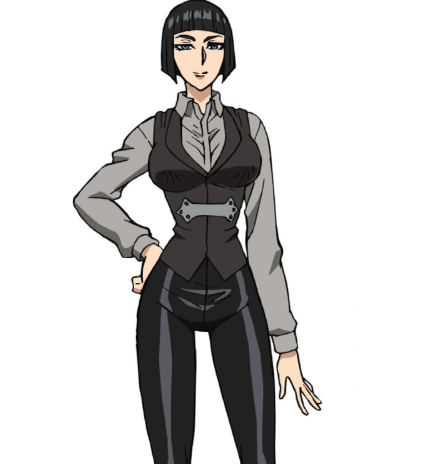
Vilma Thorne is a striking woman with an imposing presence, enhanced by her masterful skill in knife-throwing. She has long, dark hair that she often ties back to keep it out of her face during performances or when using her knives. Her sharp, intense eyes reflect her past and the emotional scars that she carries, while her athletic build showcases her agility and precision.
As a member of the Nakamachi Circus, Vilma wears the circus’s costume, which allows her to blend her assassin background with the flair of a performer. Her attire is practical yet dramatic, designed to enhance her performance as a knife-thrower. She typically carries her knives on her person, ready to use them at a moment’s notice. Vilma’s overall appearance is both alluring and intimidating, giving her the air of someone with a complex history and a dangerous skillset.
Personality
Vilma Thorne is a deeply conflicted individual. On the surface, she is calm, composed, and confident, especially when performing her knife-throwing act. Her past as an assassin has imbued her with a level of emotional control and focus that few can match. However, beneath this exterior lies a woman burdened by grief, loss, and hatred. Vilma harbors a strong animosity toward automated puppets, an emotion that stems from her brother’s death from Zonapha syndrome and the belief that technology played a role in his suffering.
Though she initially joins the Nakamachi Circus out of necessity, Vilma begins to find a sense of purpose and belonging among the performers. Over time, she starts to forge deeper connections with the other members of the circus, though her internal struggles remain ever-present. Her emotional journey revolves around her attempts to come to terms with her past and her hatred for the world of technology, particularly automated creations, which she blames for the death of her brother.
Vilma is a woman who, despite her violent and tragic past, seeks redemption and healing through her new life. She is often seen grappling with her anger and bitterness, yet her time with the circus provides her with moments of reflection and growth. Her journey is one of self-discovery, as she tries to reconcile the person she once was with the person she wants to become.
Role in the Story
From Assassin to Ally: Vilma is introduced as a villainous figure, hired to assassinate Masaru Saiga. Her first confrontation with him and the Nakamachi Circus members showcases her deadly abilities, particularly her expert knife-throwing. However, Masaru’s innocence and the kindness shown by the circus members challenge her worldview.
Joining the Nakamachi Circus: After choosing not to kill Masaru, Vilma becomes a core member of the circus, performing her knife-throwing skills as part of their act while fighting alongside the team against puppet-based enemies and the forces behind the Zonapha syndrome.
Confronting Her Past: Throughout her journey, Vilma gradually overcomes her trauma, especially her hatred toward puppets. Her evolution reflects one of the central themes of Karakuri Circus: that pain and loss can be transformed into strength and healing when shared with others.
Relationships
Masaru Saiga: The boy she was once assigned to kill becomes the person she swears to protect. Vilma develops a strong, sister-like bond with Masaru, becoming one of his most dedicated protectors.
Nakamachi Circus: Vilma finds family and belonging within the circus troupe. While she is initially aloof, she grows close to fellow members like Narumi Kato and Shirogane, developing mutual respect and camaraderie.
Her Younger Brother: Though deceased, Vilma’s younger brother plays a significant role in shaping her motivations. His death due to Zonapha syndrome is the emotional root of her hatred for puppets and her initial rejection of empathy.