
Narumi Kato
Narumi Kato |
|
|---|---|
 |
|
| Kanji: | 加藤 鳴海 |
| Romaji | Katō Narumi |
| Statistics | |
| Age: | 18 |
| Birthday: | Unknown |
| Height: | Unknown |
| Portrayed by: | |
| Japanese: | Koyama Rikiya |
| English: | TBA |
Narumi Kato (加藤 鳴海, Katō Narumi), is a young man with a unique and tragic condition known as Zonapha Syndrome, which requires him to make people laugh in order to survive. Originally from Japan, Narumi trained in Kung-Fu under the tutelage of his master, Liang Jian-Feng, in China. His mastery of Kung-Fu and his struggle with Zonapha Syndrome create a distinctive contrast in his character, blending elements of martial arts discipline with a deeply personal emotional battle.
Narumi’s condition dictates his life in ways he cannot control, often leading him to seek laughter from others as a means of ensuring his survival. His story explores themes of humor, survival, and the human need for connection, and Narumi’s journey is one of balancing his responsibilities and his health while navigating the challenges of his unique condition.
Background
Appearance in Anime
Narumi Kato’s early life was marked by his rigorous training in Kung-Fu under the mentorship of Master Liang Jian-Feng in China. His time spent honing his martial arts skills shaped him into a disciplined, strong, and focused individual. However, Narumi’s life took a tragic turn when he was diagnosed with Zonapha Syndrome, a rare condition that forces him to make people laugh in order to sustain his life. This strange condition controls his survival in an uncontrollable and unpredictable way.
Despite his condition, Narumi continues to live a relatively normal life, relying on his humor and charm to bring joy to others, even when it might not align with his true emotions. His Kung-Fu training gives him both strength and discipline, and he uses these skills to navigate life while balancing the constant pressure of having to entertain those around him.
Appearance
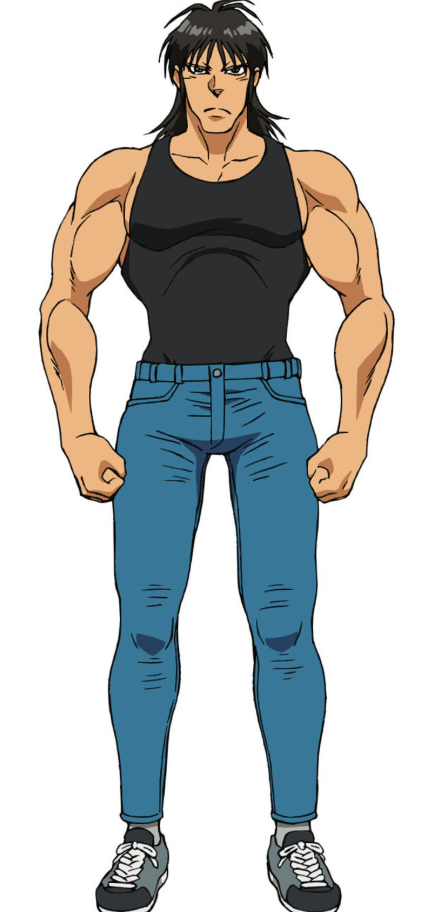
Narumi Kato has a lean, athletic build, the result of his intense Kung-Fu training. His physical appearance is striking, with sharp features and a strong posture that reflects both his martial arts discipline and his internal strength. His hair is short and typically styled in a way that complements his active lifestyle. Narumi’s expression often carries an air of both determination and humor, as he constantly finds himself in situations where he must use his charm and wit to survive.
When not in his martial arts attire, Narumi’s clothing is casual but practical, designed for the kind of mobility needed for both his Kung-Fu training and his day-to-day life. His overall appearance conveys both the seriousness of his Kung-Fu practice and the light-hearted nature required by his condition.
Personality
Narumi Kato is a complex character who balances the discipline and focus required by his Kung-Fu training with the constant need to make others laugh due to his Zonapha Syndrome. On the outside, he may seem cheerful, energetic, and approachable, always ready with a joke or a funny comment to lighten the mood. However, beneath his humorous exterior lies a man who is struggling with the burden of his condition, as the necessity to make others laugh is not always in line with his true feelings.
Despite his struggle, Narumi is a strong-willed and determined individual. His Kung-Fu training has instilled in him a sense of discipline, resilience, and self-control. He is deeply compassionate and values human connection, which makes his condition all the more difficult to bear, as it constantly requires him to perform for others rather than connect on a deeper emotional level. Narumi’s journey involves coming to terms with his condition while still maintaining the humor and lightheartedness that have become integral to his survival.
Role in the Story
The Guardian of Masaru: Narumi’s journey begins when he saves Masaru Saiga, a young heir targeted by mysterious foes. Despite barely knowing the boy, Narumi takes on the role of protector, leading to a series of high-stakes battles against automatons mechanical enemies who share a connection to Zonapha Syndrome. Narumi’s physical prowess becomes the first line of defense in a conflict much larger than he ever anticipated.
Unraveling Zonapha: Narumi’s personal quest is to understand and overcome Zonapha Syndrome, which puts him on a collision course with those responsible for its origin. This leads him to cross paths with the Shirogane organization, which fights against the automatons and the puppet master behind them, Faceless. As Narumi’s involvement deepens, he becomes one of the central figures in humanity’s last stand.
Sacrifice and Transformation: Throughout the series, Narumi undergoes a painful transformation that fuses his human body with automaton-like traits, enabling him to fight on equal footing with the enemy. His body may become more mechanical, but his human spirit remains intact. Narumi’s later battles reflect his internal conflict balancing his sense of identity against the inhuman changes forced upon him. Ultimately, his sacrifice plays a pivotal role in bringing the war to its conclusion.
Relationships
Masaru Saiga: Masaru is the young boy Narumi swears to protect. Their bond is central to the early story arc, with Narumi acting as a surrogate older brother and protector. Masaru gives Narumi purpose, and Narumi, in turn, teaches Masaru how to stand up for himself.
Shirogane (Éléonore Saiga): Narumi and Shirogane develop a strong partnership as they fight together against the automatons. Though their initial relationship is built on a shared goal, over time they develop a deep emotional connection and mutual trust.
Liang Jian-Feng: Narumi’s Kung-Fu master in China. Though he does not appear extensively, Liang plays a key role in shaping Narumi’s early development and fighting abilities.