
Miuna Shiodome
Miuna Shiodome |
|
|---|---|
 |
|
| Japanese | 潮留 美海 |
| Romaji | Shiodome Miuna |
| Personal Information | |
| Age | 9 14 (Post-timeskip) |
| Gender | Female |
| Status | Alive Student |
| School | Hama Elementary (formerly) Mihama Middle School |
| Debut | |
| Manga | Volume 1, Chapter 1 |
| Anime | Episode 1 |
Appearance
Before the Timeskip
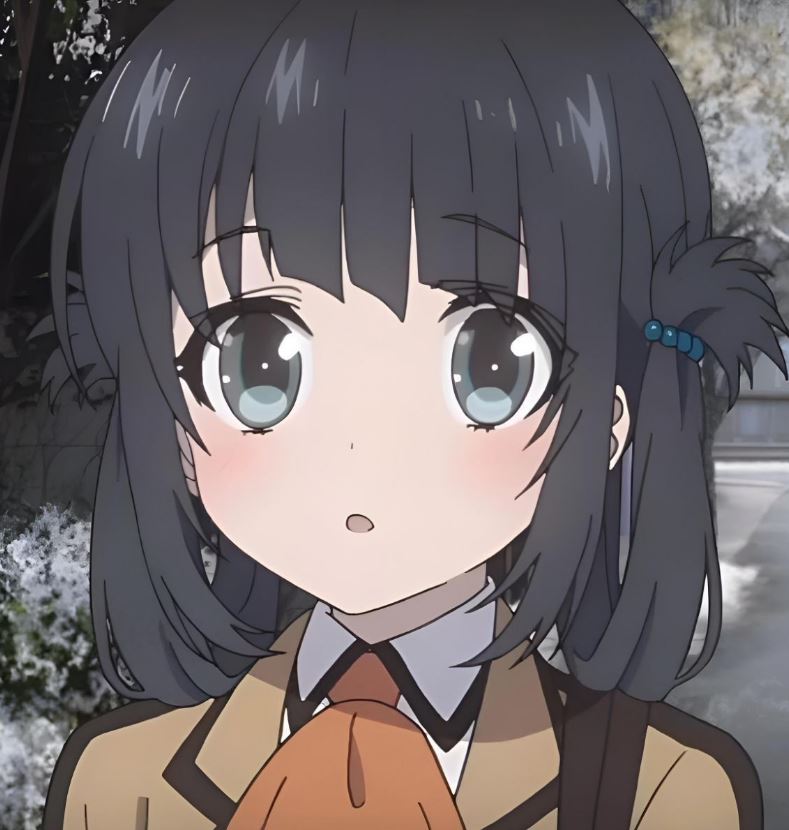
Miuna is portrayed as an adorable young girl with straight, shoulder-length black hair and an asymmetrical fringe that sweeps to the left side of her face. Her eyes are a soft blue-gray, often appearing more vividly blue when caught in the light.
After the Timeskip
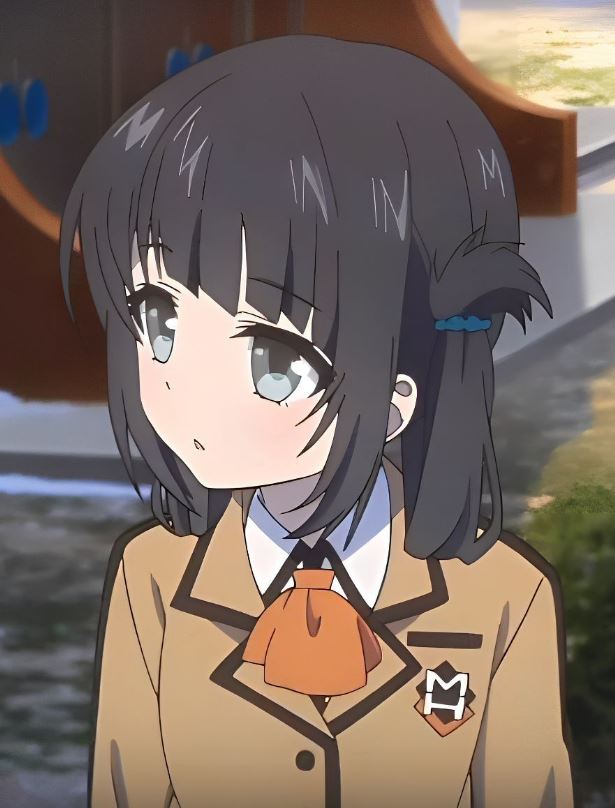
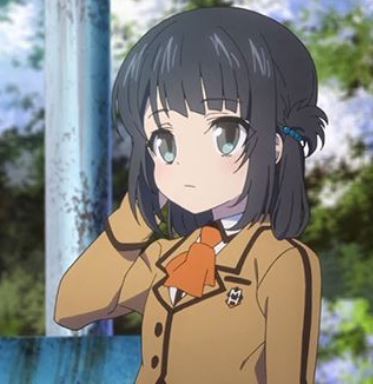
Following the five-year time skip, Miuna matures into a graceful middle school student. Her hair grows significantly longer, reaching her waist, and she styles it into two looped buns on either side of her head. She is usually seen in her Mihama Middle School uniform, paired with long black stockings. After awakening her Ena—a trait of sea people, her grayish-blue eyes begin to deepen in color, gradually turning a more striking blue over time.
Appearance in Anime
Appearance in Anime
Personality
Miuna is initially portrayed as a quiet and reserved child who struggles to express her emotions directly. As a 9 year old, she often depends on her best friend, Sayu Hisanuma, to speak on her behalf. Instead of voicing her thoughts aloud, she prefers to communicate in more subtle ways such as using gum to stick notes on a wall.
After the timeskip, Miuna becomes a more self-assured and independent middle school student. Although she remains somewhat insecure, she grows into a thoughtful, intelligent, and courageous young girl. Despite her initial resistance to Akari Sakishima, whom she and Sayu tried to drive away due to Akari’s relationship with her father Miuna deeply values her family and matures enough to recognize and embrace those around her with compassion and understanding.
History
Miuna lost her biological mother, Miori Shiodome, three years before the events of the series. This early loss deeply affected her, leaving her with an underlying fear of losing those she cares about. Miori was originally from the sea, but after choosing to remain on the surface and marry Itaru Shiodome, she became unable to return to her underwater origins. Miuna’s mixed heritage and her mother’s sacrifice contribute to her emotional struggles, especially when new relationships, like her father’s with Akari Sakishima, begin to take shape.
Relationships
Miori Shiodome
Miuna lost her biological mother, Miori, at a young age and retains only faint memories of her. Although she didn’t have the chance to know her well, Miori remains an important figure in Miuna’s life, and her absence left a lasting impact. Over time, Miuna came to accept Akari Sakishima as her new mother.
Akari Sakishima
Akari is Miuna’s stepmother. Initially, Miuna referred to her simply as “Aka” before understanding her father’s relationship with her. Although she once resisted Akari’s presence in their family, Miuna eventually accepted her wholeheartedly, now calling her “Mom” and embracing her as part of the family
Hikari Sakishima
Hikari is Miuna’s step-uncle, but she develops romantic feelings for him as she grows older. Aware that Hikari only sees her as a younger sister and is deeply in love with Manaka, Miuna chooses to suppress her feelings. She supports Hikari in his quest to help Manaka regain her lost emotions, even though doing so pains her. Miuna ultimately becomes the Maiden Sacrifice in place of Manaka, and as she falls into slumber, she acknowledges her love for Hikari. While her feelings are unreciprocated romantically, Hikari cares for her deeply and is protective of her, cherishing her as someone important in his life.
Etymology
The name Miuna (美海) is composed of the kanji “美” (mi) meaning “beautiful” and “海” (una) meaning “sea” or “ocean,” giving the name the meaning “beautiful sea” or **”beautiful ocean.”
Her surname Shiodome (潮留) combines “潮” (shio) meaning “tide” or “ebb,” and “留” (tome/dome) meaning “to halt” or “to detain,” which together can be interpreted as “halt the tides.” This reflects the series’ frequent themes of the sea, change, and the tension between movement and stillness.