
Infiltrating the Dark Net: Where Criminals, Trolls, and Extremists Reign
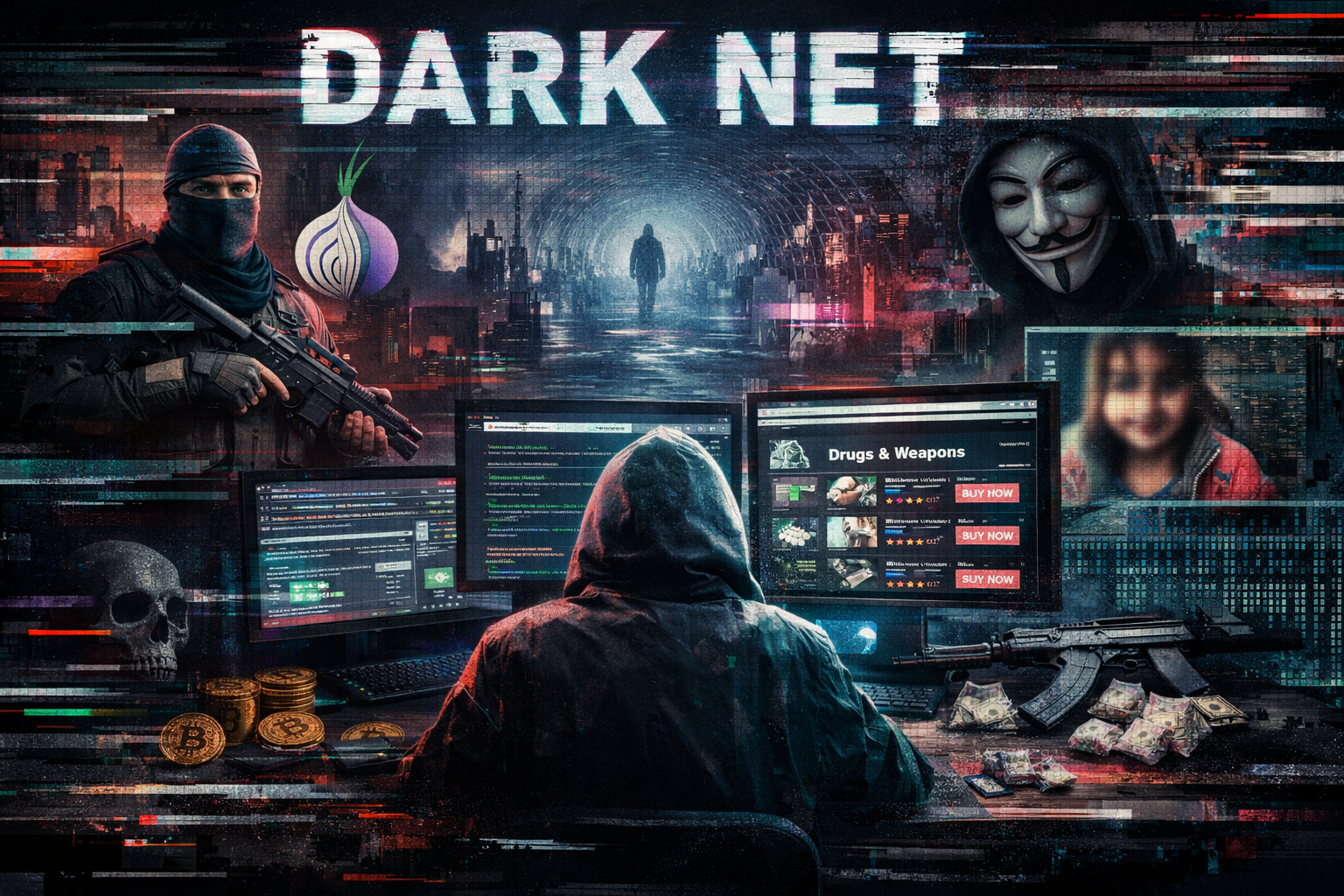
There is a part of the Internet most people will never see.
Hidden beneath the familiar surface of Google searches, social media feeds, and online shopping lies an encrypted world known as the Tor Network—a shadowy digital frontier made up of tens of thousands of websites invisible to standard browsers like Chrome or Firefox. This hidden realm, often called the darknet, is where anonymity reigns and rules are scarce.
Author and researcher Jamie Bartlett, who explored this underground world for his book The Dark Net, describes it as nothing less than the Wild West of the Internet.
| “ | ” | |
A Doorway Into the Shadows
Bartlett’s journey into the darknet began with academic curiosity. While researching radical political movements online, he discovered that many of these groups were operating far from the open web. Slowly, his work pulled him deeper into encrypted spaces where anonymity offered protection—and temptation.
To enter, all one needs is the Tor browser, a tool originally developed by U.S. naval intelligence. Tor works by bouncing a user’s internet request through multiple computers across the globe, encrypting and decrypting data along the way. By the time a website receives the request, the original source is nearly impossible to trace.
With Tor, users can browse ordinary sites anonymously—or step into a parallel Internet of hidden services accessible only through encrypted addresses.
The Marketplace of the Invisible
Inside the darknet, Bartlett found something unsettlingly familiar.
Black-market marketplaces function much like mainstream e-commerce platforms. Using Bitcoin, a cryptocurrency that masks users’ identities, buyers scroll through listings that resemble an illicit version of eBay. Drugs are categorized, vendors are rated, and user reviews guide purchasing decisions.
The process is disturbingly simple: choose a product, pay with cryptocurrency, provide a delivery address, and wait for the package to arrive by mail.
“It really is that simple,” Bartlett notes.
Freedom, Taken to Its Limits
For many darknet users, anonymity is not just a convenience—it’s a philosophy.
Rooted in libertarian ideals dating back to the 1990s, some believe the Internet should exist beyond the reach of governments and institutions. In their view, encryption and anonymity are tools of personal freedom, allowing people to communicate, trade, and form identities without surveillance.
Bartlett acknowledges this belief has merit—but also consequences.
| “ | ” | |
The Darkest Corners
Among the most disturbing discoveries are child exploitation networks, which are exceptionally difficult to dismantle. Encrypted servers make sites hard to locate, but technology is only part of the problem.
According to the Internet Watch Foundation, a significant portion of abusive material now originates from minors themselves—young people sharing images with peers, unaware of the predators who collect and redistribute them. These images then circulate endlessly within hidden networks, forming vast, decentralized archives.
It is a problem that encryption alone cannot solve.
Extremists in the Digital Age
The darknet is not the only battlefield. Extremist groups like ISIS have mastered mainstream platforms as well, using social media with the sophistication of modern advertising agencies.
Bartlett observed propaganda videos designed to go viral—slick visuals, emotional hooks, even pictures of fighters posing with cats.
The reason, he explains, is simple: many recruits are Western men in their 20s and 30s, fluent in internet culture. They understand what spreads, what engages, and what persuades.
Fighting Fire With Fire
Ironically, some of the most effective opposition to extremist propaganda comes not from governments, but from hackers.
Groups like Anonymous have targeted ISIS online, taking down accounts and disrupting propaganda campaigns. While controversial, Bartlett believes these decentralized digital vigilantes may be uniquely equipped to fight enemies who thrive in cyberspace.
“When you’re fighting groups that are this good online,” he argues, “you need people who are just as good.”
The Art of Trolling
Not all darknet culture revolves around crime or extremism. Bartlett also immersed himself in trolling communities, where provocation is considered an art form.
The term “troll,” he explains, comes not from fairy tales but from fishing—dragging bait across the water to see who bites. For traditional trolls, offense is deliberate, calculated, and often clever. They see themselves as defenders of free speech, pushing boundaries to toughen society’s skin.
They reject the idea that trolling is mere bullying. To them, it is performance, satire, and rebellion rolled into one.
A Mirror of Humanity
Bartlett’s conclusion is neither simple nor comforting.
The darknet is not an alien world—it is a reflection of humanity when freed from consequence and visibility. It amplifies creativity and cruelty, innovation and exploitation, liberty and harm.
For better or worse, it is what happens when technology removes the mask.
And once you step inside, as Bartlett discovered, the voices there are not silent at all.
“They want to be heard,” he says. “Once they trust you, they won’t stop talking.”