
Hackers: The Good, the Bad, and the Ambiguous
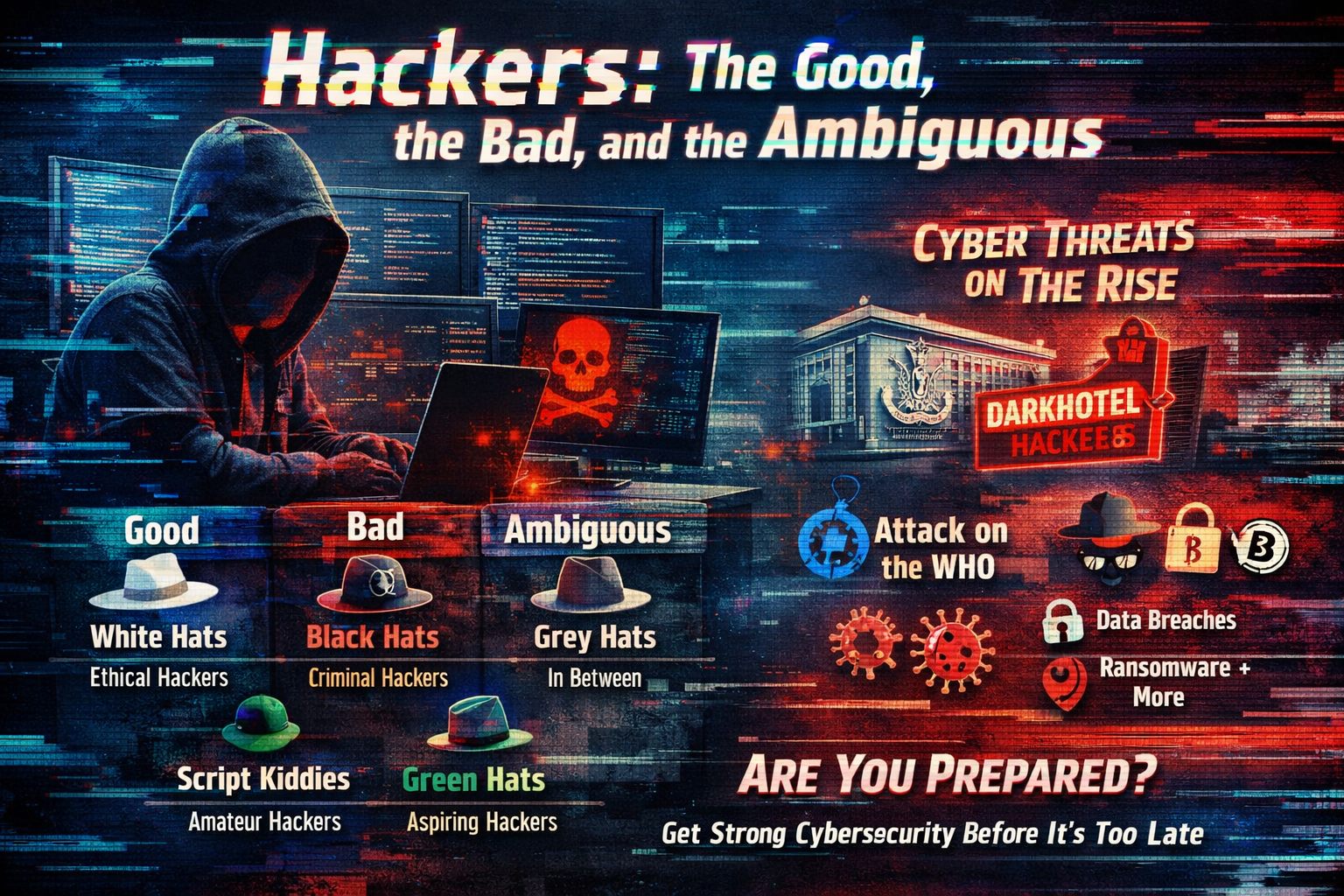
When most people think of a hacker, an image comes to mind: a young man in a black hoodie, multiple screens glowing in the dark, energy drinks at hand, breaking into systems for fun or profit. But is this really accurate?
The truth is far more complex. Hackers can be anyone—of any age, gender, or background. They may live anywhere in the world. Without a face to the word, the idea of a “hacker” can feel unnerving, which is why society often clings to stereotypes.
Types of Hackers
Hackers are not all villains. They are classified by their intentions, skills, and ethics. Understanding these categories is key to knowing who poses a threat—and who can actually help.
Black Hat Hackers
- The “bad guys” of the hacking world.
- Operate without permission, breaking systems for personal, political, or financial gain.
- Example: A hacker who steals data or spreads malware. Some, like Mike Jones, have turned Black Hat experience into a career as a security professional.
White Hat Hackers
- Ethical hackers who work to protect organizations.
- Use the same skills as Black Hats, but with permission to find vulnerabilities and fix them before criminals can exploit them.
Grey Hat Hackers
- Fall between White and Black Hats.
- May not have permission, but aim to help or expose weaknesses for public benefit.
- Sometimes cross into Black Hat territory if their advice is ignored.
Blue Hat Hackers
- Similar to White Hats, but specialize in Microsoft systems.
- Often invited to test software for vulnerabilities before release.
Red Hat Hackers
- Defensive like White Hats, but proactive.
- Not only stop attacks—they go after and disrupt Black Hats in retaliation.
Script Kiddies
- Beginners who lack real technical knowledge.
- Use pre-made scripts or tools found online to hack.
Green Hat Hackers
- Amateur hackers eager to learn.
- Unlike Script Kiddies, they aim to develop skills and become professional hackers.
Key takeaway: While many hackers are ethical, it only takes one Black Hat—or a conflicted Grey Hat—to target you, your business, or your data.
Cyber Threats Are Increasing
The COVID-19 pandemic has made cyber threats more prevalent than ever. For example, the cybercrime group DarkHotel attempted to infiltrate the World Health Organization (WHO). Though unsuccessful, it highlights a worrying trend: cyberattacks have more than doubled during the pandemic.
In today’s world, it’s no longer a question of if your systems will be targeted—it’s a question of when.
The solution: Strong, professional cybersecurity that can match and outsmart the skills of hackers, protecting your business, employees, and data.