
Deep Web vs Dark Web: Key Differences Explained (2025)
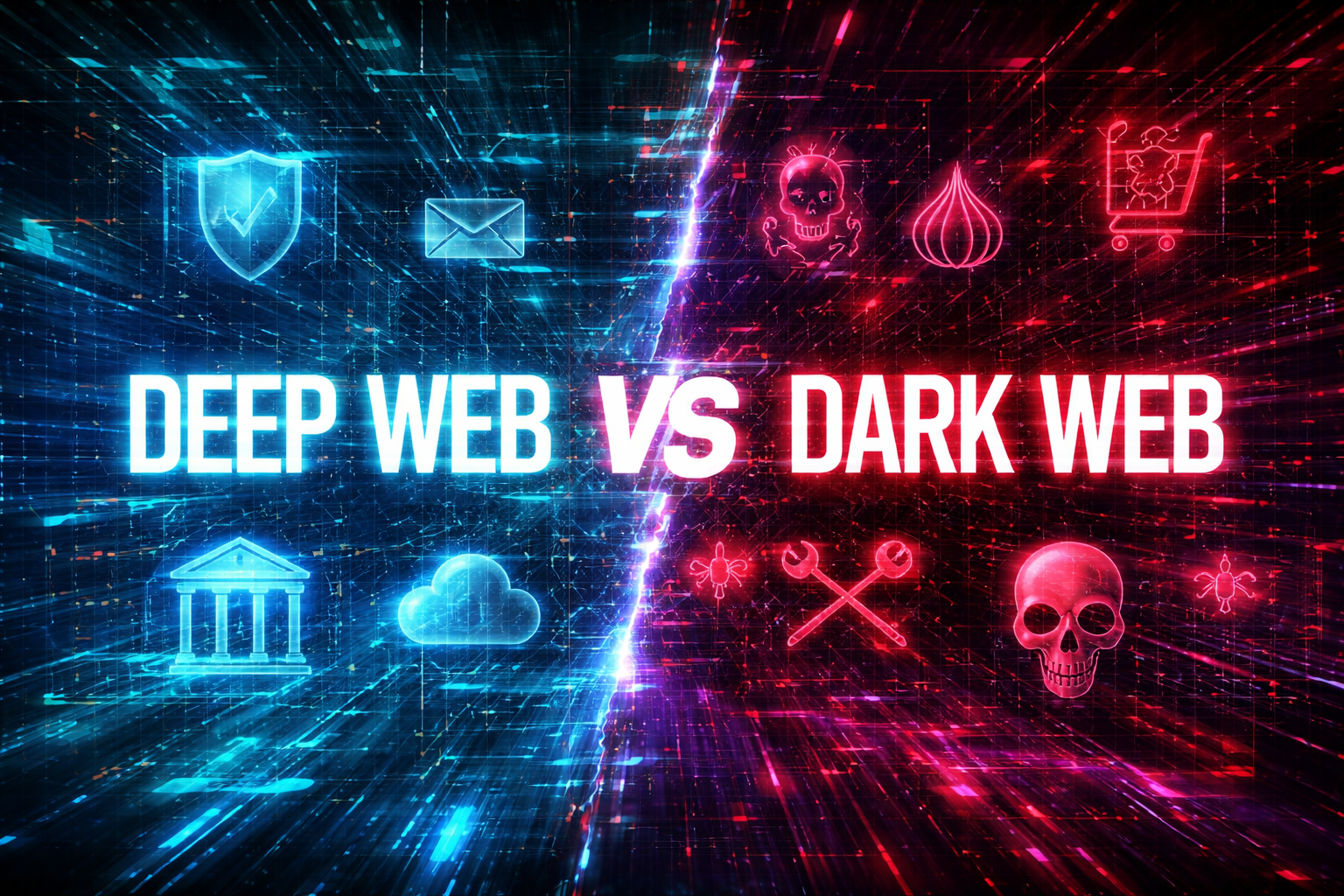
The terms deep web and dark web are often confused—but they are not the same thing. Understanding the difference is essential in 2025, as cybercrime, privacy concerns, and data breaches continue to rise.
In short:
- The deep web is normal, private, and necessary
- The dark web is hidden, anonymous, and high-risk
Let’s break it down clearly.
Internet Layers Explained (The Iceberg Model)
Think of the internet like an iceberg:
- Surface Web (Top)
- Deep Web (Middle – Largest Layer)
- Dark Web (Bottom – Tiny Layer)
What Is the Deep Web?
The deep web includes all online content that search engines can’t index. If you need a login, subscription, or direct access, it’s deep web content.
Common Deep Web Examples
- Email inboxes (Gmail, Outlook)
- Online banking and financial portals
- Cloud storage (Google Drive, Dropbox)
- Private social media profiles
- Subscription content (Netflix, news paywalls)
- Corporate intranets and government databases
- Academic journals and research archives
How You Access the Deep Web
- Use a normal browser (Chrome, Firefox, Safari)
- Log in with credentials or visit a direct URL
- No special tools required
Is the Deep Web Safe?
Yes. The deep web is not dangerous by default—it exists to protect privacy.
Main risks:
- Phishing
- Weak passwords
- Data breaches
If a deep web system is compromised, stolen data often ends up on the dark web.
What Is the Dark Web?
The dark web is a small, hidden subset of the deep web that exists on encrypted networks called darknets.
The most common darknet is Tor (The Onion Router).
Key Characteristics
- Requires special software (Tor Browser)
- Uses non-standard domains like .onion
- Designed for strong anonymity
- Not indexed by Google or Bing
- Both users and site owners can remain hidden
The dark web makes up far less than 1% of the internet, but it concentrates a high level of illegal activity.
How to Access the Dark Web (Technically)
To access the dark web, you must:
1.Download the Tor Browser
2. Connect to the Tor network
3. Visit .onion addresses
You cannot access dark web sites with Chrome or Safari.
Is Using the Dark Web Legal?
- Yes, in most countries, simply using Tor or accessing .onion sites is legal.
- No, illegal activity remains illegal—even on the dark web.
Conclusion
The internet is far more layered than it appears on the surface. In 2025, understanding the difference between the deep web and the dark web is no longer optional—it’s part of being digitally aware.
The deep web is a normal and essential part of everyday life. It exists to protect privacy, secure personal information, and enable services like online banking, email, subscriptions, and business systems. There is nothing inherently dangerous about it; in fact, most of the internet operates there by design.
The dark web, while much smaller, is fundamentally different. It is built around anonymity and deliberately hidden access. While it does support legitimate uses such as free speech, whistleblowing, and censorship resistance, it is also the primary marketplace for cybercrime, stolen data, and illicit services. This makes it significantly riskier for individuals and a major concern for organizations.
The key takeaway is simple: privacy and anonymity are not the same thing. The deep web protects information from public exposure, while the dark web hides identities—sometimes for good reasons, often for harmful ones. Confusing the two can lead either to unnecessary fear or dangerous overconfidence.
In an era of constant data breaches and expanding cyber threats, knowing where your data lives, how it can be exposed, and where stolen information ends up is critical. Awareness, strong security practices, and proactive monitoring are the best defenses. Understanding the deep web vs dark web distinction isn’t just technical knowledge—it’s a practical skill for staying safe and resilient online.