
AlphaBay: How Seven Countries Worked Together to Take Down the Biggest Online Black Market for Drugs
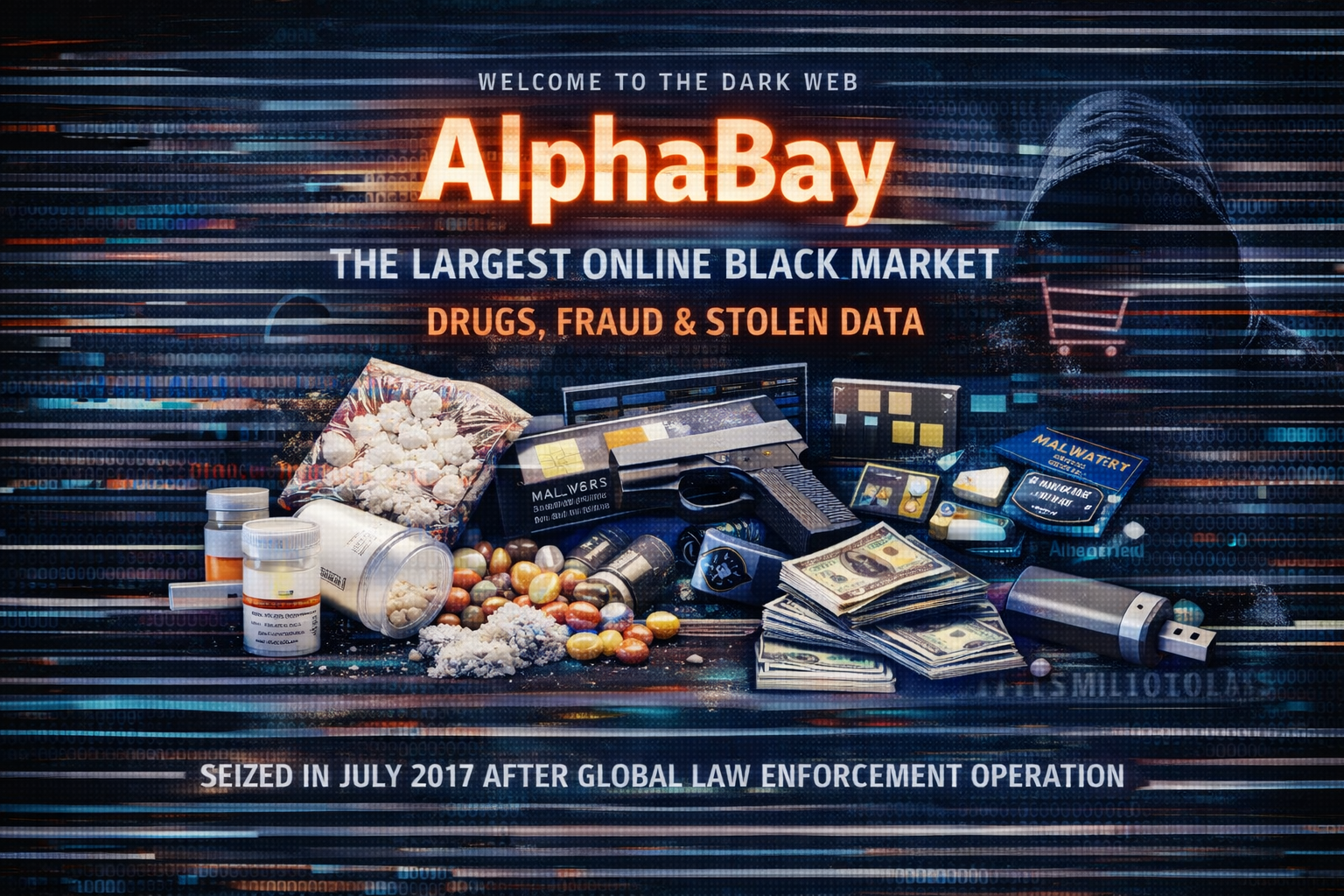
Have you ever heard of the dark web? One of its most notorious platforms was AlphaBay, a massive online marketplace designed to facilitate illegal trade. Launched in December 2014 by Canadian citizen Alexandre Cazes, AlphaBay allowed users to anonymously buy and sell a wide range of illicit goods, including controlled substances, stolen and fraudulent identification documents, counterfeit items, malware and hacking tools, firearms, and toxic chemicals. Operating through the Tor network, AlphaBay quickly became a central hub for criminal activity online.
At its peak, AlphaBay hosted thousands of vendors and served more than 200,000 buyers worldwide, making it the largest online black market for drugs at the time. Authorities estimate that the platform laundered hundreds of millions of dollars in cryptocurrency derived from illegal transactions. Its scale was unprecedented—by some estimates, AlphaBay was five to ten times larger than Silk Road, the dark web marketplace it effectively replaced after Silk Road’s shutdown.
In July 2017, AlphaBay was taken down through a highly coordinated international law enforcement operation. Agencies in the United States and Europe—including the FBI, Drug Enforcement Administration (DEA), Europol, and the Dutch National Police—worked together to dismantle the platform. With assistance from authorities in Thailand, Lithuania, Canada, the United Kingdom, and France, AlphaBay’s servers were seized, cutting off access to users around the world. As part of the operation, Alexandre Cazes was arrested in Bangkok on 5 July 2017 at the request of U.S. authorities.
Cazes was held by the Royal Thai Police for approximately seven days while awaiting extradition to the United States. On 12 July 2017, he reportedly died by suicide while in custody. Shortly thereafter, on 19 July 2017, the U.S. Attorney’s Office for the Eastern District of California filed a civil forfeiture complaint against Cazes and his wife, targeting luxury properties, vehicles, and millions of dollars in cryptocurrency linked to AlphaBay’s operations.
The AlphaBay case illustrates how criminal groups increasingly organize online, particularly on the dark web, to commit serious and wide-ranging crimes. Beyond enabling cyber-dependent crimes such as malware distribution and hacking services, dark web marketplaces like AlphaBay have facilitated cyber-enabled crimes including drug trafficking, firearm sales, money laundering, credit card fraud, and identity theft. These platforms allowed individuals like Cazes to operate global criminal enterprises from a single location, coordinating illicit activity across multiple continents.
Because of this global reach, dismantling AlphaBay required well-organized and timely international cooperation. In total, at least 11 law enforcement agencies from six different countries were involved in the operation. The takedown of AlphaBay, combined with the simultaneous law enforcement takeover of Hansa Market in a related operation, significantly damaged trust among dark web users—an essential component for these marketplaces to function. While illicit platforms continue to emerge, the AlphaBay case demonstrated that even the largest dark web markets are vulnerable to coordinated global action.