Did You Know?
You can create any type of product documentation with Docy
You can create any type of product documentation with Docy
Have you ever heard of the dark web? In addition to providing privacy for users who want to avoid surveillance, the dark web also hosts black markets of various sizes. According to a study by Chainalysis, Bitcoin transactions on these markets can reach up to $2 billion annually.
One example is the now-shut-down Hydra Marketplace. Authorities traced transactions worth $5.2 billion on Hydra dating back to 2015. It is important to note that Hydra was only one market within a much larger dark web ecosystem. This raises an important question: what are these transactions actually for?
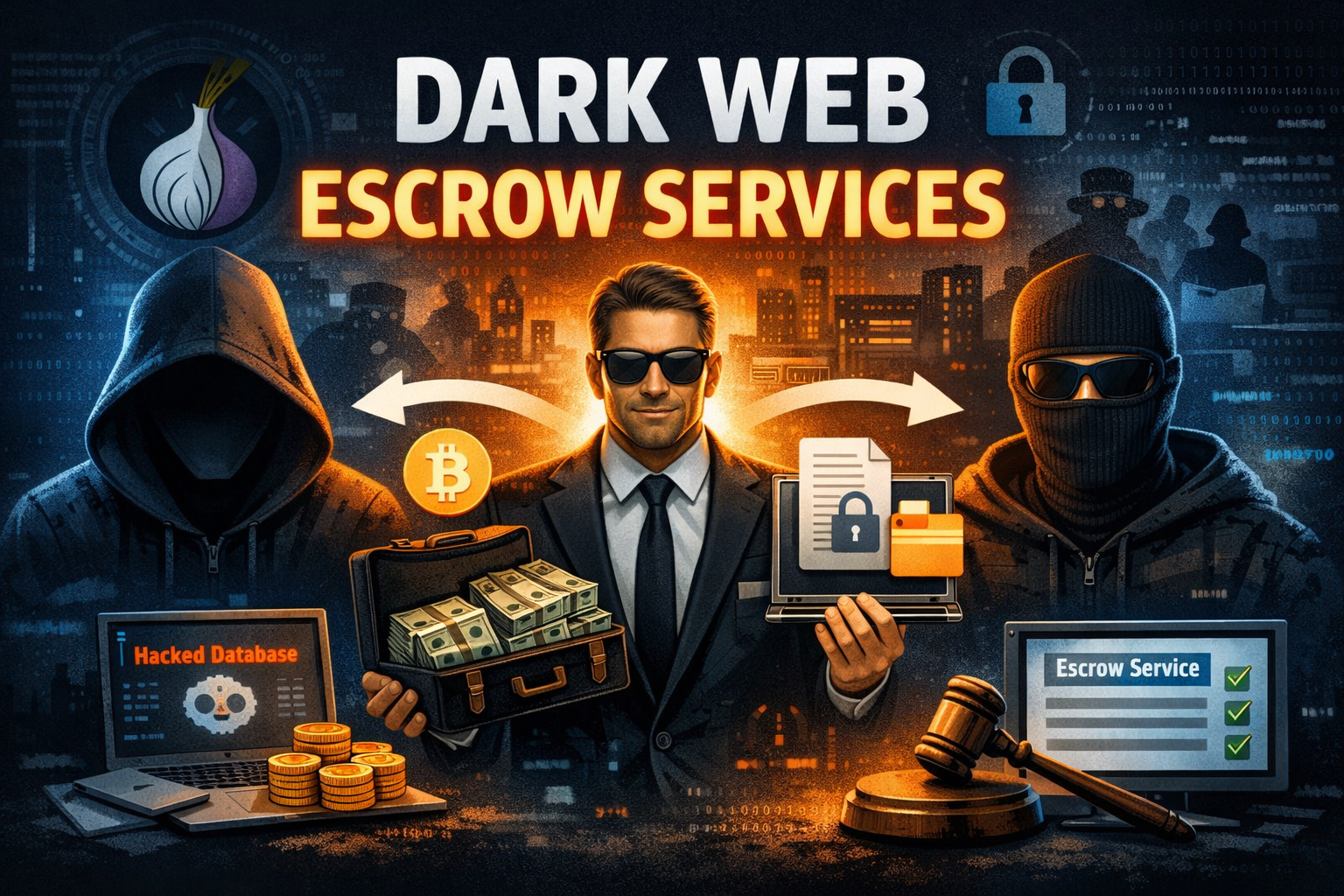
The Story Behind Dark Web Escrow Services
Most dark web transactions involve illegal activities that cannot be conducted openly. Sellers usually advertise what they are offering on dark web forums or Telegram channels, allowing buyers to contact them anonymously. Every step of the process—from first contact to payment—is designed to remain private.
One of the most valuable commodities on these markets is information. Threat actors often steal large amounts of data and compile databases that may include personal details, login credentials, or even sensitive information belonging to high-level corporate executives.
As these markets grew, a new group of participants emerged—often referred to as “hyenas.” These individuals scam the threat actors who originally stole the data. Like any market facing fraud, this behavior threatened trust and stability. To solve this problem, dark web markets adopted a concept borrowed from legal commerce: escrow services.
What Is an Escrow Service?
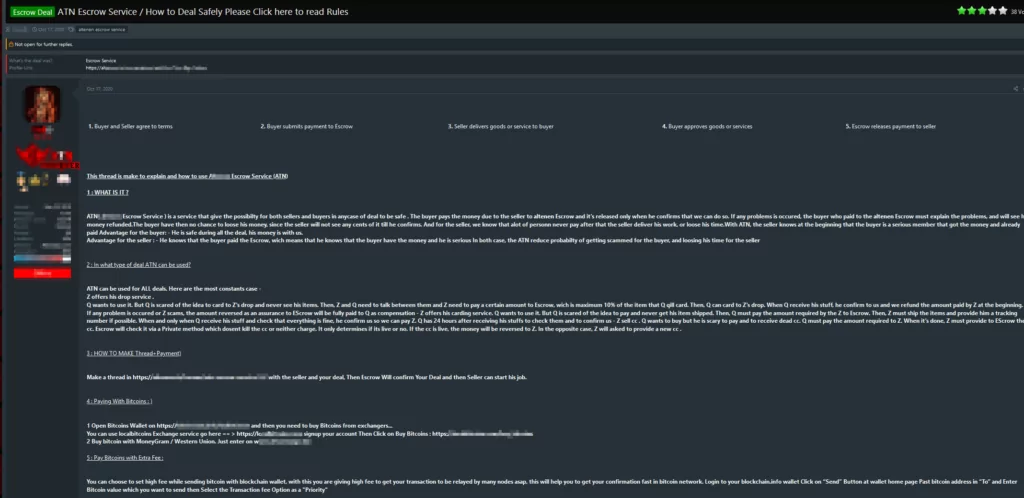
An escrow service, sometimes called a “middleman service” on dark web forums, exists to reduce fraud. A trusted third party—known as the middleman or guarantor—stands between the buyer and the seller to ensure that neither side cheats the other.
How Does It Work?
The middleman temporarily holds both the payment and the data. They verify that each party has met the agreed conditions before completing the transaction. In return, the middleman earns a commission, which is usually paid by the buyer.
However, this system is not completely safe.
There is no guaranteed way to prevent a dishonest middleman from keeping the money or copying the data. That said, most middlemen are individuals with strong reputations on the dark web. Since users operate only under nicknames, reputation is their most valuable asset. Losing it can be far more damaging than the profit from a single fraudulent transaction.
Building such a reputation takes time and often requires years of activity as a buyer or seller. Because of this, most trusted middlemen avoid scams and focus on maintaining their standing in the community.
Improvements to Escrow Services
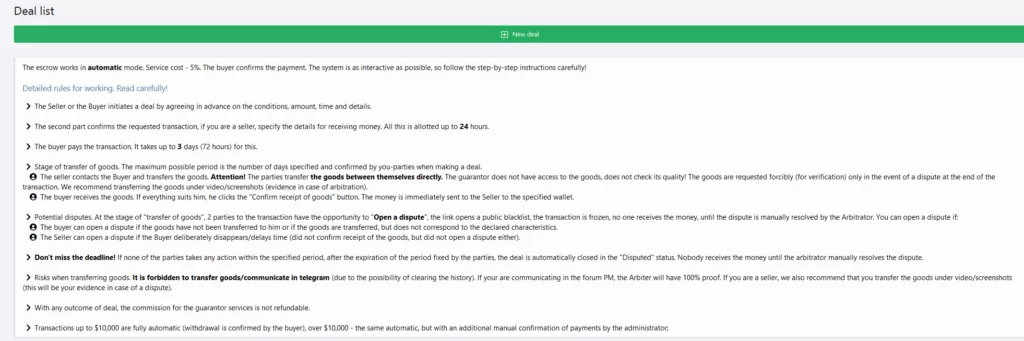
Due to the high demand for safer transactions, many dark web markets now offer official escrow services managed by the platform itself. Some markets even provide ticket systems where users can report issues. Market administrators review both sides of the dispute and make a final decision.
Other markets use systems where the middleman only handles the payment, not the data. In this setup, the buyer checks the data directly before releasing the funds, reducing the risk of sensitive information being leaked.
Some platforms also require high entry fees or account verification to reduce fraud. Even if buyers and sellers meet on external platforms like Telegram, verified accounts allow markets to identify and remove users who break the rules.