
Tsubasa Hanekawa
Tsubasa Hanekawa |
|
|---|---|
 |
|
| Japanese | 羽川 翼 |
| Romaji | Hanekawa Tsubasa |
| Statistics | |
| Classification | Human-oddity hybrid (Black Hanekawa, Kako) Human with Vampire Blood |
| Symbol | Cat, Tiger |
| Gender | Female |
| Occupation | Student (Naoetsu Private High School) |
| Portrayed by: | |
| Japanese | Yui Horie |
| English | Cristina Vee |
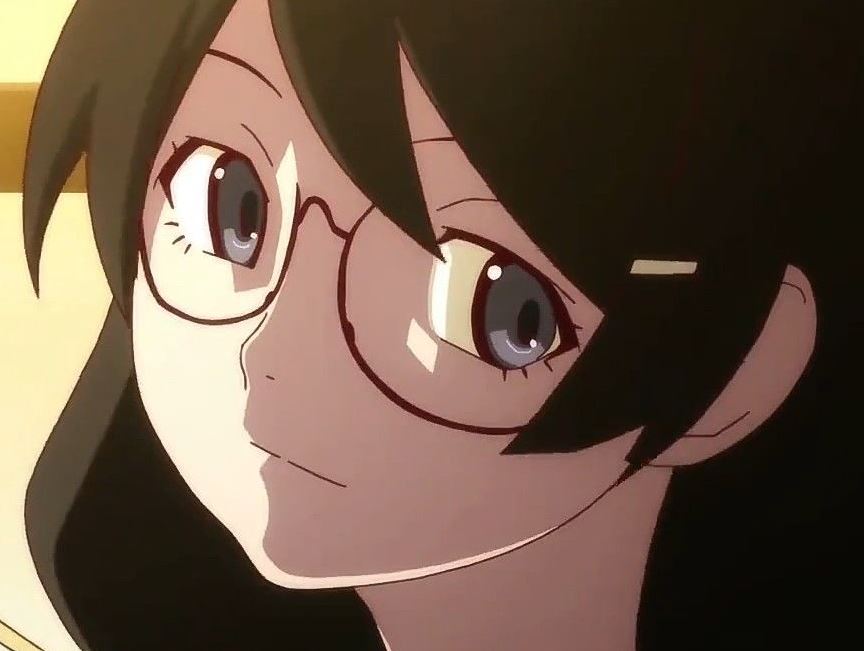
Tsubasa Hanekawa (羽川 翼, Hanekawa Tsubasa) is a major character in the Monogatari series. She is a class representative, top student, and close friend of Koyomi Araragi at Naoetsu Private High School. Widely admired for her intelligence, composure, and academic excellence, Hanekawa is seen as a model student by her peers. However, beneath her seemingly perfect exterior lies a strained and complex family life shaped by difficult personal circumstances.
During Golden Week, she becomes afflicted by a supernatural oddity, which results in the creation of her alternate personality known as Black Hanekawa. While under this influence, she is unknowingly responsible for a series of mysterious attacks in town, marking the beginning of her entanglement with the world of oddities.
Personality
Tsubasa Hanekawa alongside her alternate self, Black Hanekawa
Tsubasa Hanekawa presents herself as a calm, kind-hearted, and composed individual. Known for her excellent academic performance, she is well-liked by both teachers and classmates at Naoetsu Private High School. Her approachable nature, combined with her intelligence and soft-spoken manner, makes her widely admired. She is a diligent student with an extensive knowledge base, though she modestly downplays her intellect by repeating the phrase, “I don’t know everything, I just know what I know”, a line she reserves specifically for Koyomi Araragi, as it brings him comfort. Even when upset, she maintains a calm outward expression, typically responding with a measured tone or teacher-like scolding followed by a smile. A rare exception occurs during Sodachi Lost, where she openly displays genuine anger while confronting Ougi Oshino.
However, those who know her more intimately understand that much of this composed personality is a carefully maintained façade. Beneath it lies a personality shaped by logic and duty rather than emotional sincerity. Hanekawa often acts according to common sense rather than personal feeling, which gives her a strong sense of justice that can become overbearing. Her presence frequently causes others to confront their own flaws and insecurities.
In Tsubasa Tiger, her personality is described as one that “accepts whatever comes her way without any objections,” while also “shunning all of her undesirable traits somewhere else.” This emotional suppression ultimately manifests as supernatural beings Black Hanekawa, representing her accumulated stress and frustration, and Kako, symbolizing her envy and other repressed negative emotions.
Despite her internal struggles, Koyomi deeply admires Tsubasa. He considers her his first and best friend, as well as the one who saved him during the events of Kizumonogatari, viewing her as his ideal and most respected figure.
Appearance
Tsubasa Hanekawa is a teenage girl with black hair, purple eyes, and a fair complexion. She wears glasses and is consistently described as beautiful by characters such as Suruga Kanbaru, Hitagi Senjougahara, and Koyomi Araragi. She is typically seen in her Naoetsu Private High School uniform, even on days when school is not in session.
Earlier in the series timeline, Tsubasa wears her hair in braided pigtails and sports glasses. In Kizumonogatari, her hairstyle consists of a single ponytail, while in Nekomonogatari (Black) and Bakemonogatari, she ties her braids with cat-themed hair ribbons. After the events of Tsubasa Cat, she allows Koyomi to cut her hair as a symbolic gesture of personal growth he secretly keeps her cut braids. Following this, she switches from glasses to contact lenses.
After the events of Tsubasa Tiger, her hair develops silvery-white streaks resembling a tiger’s stripes due to her connection with the oddity Kako. Although she dyes her hair back to its natural color each morning, the stripes remain a recurring feature.
In her alternate form as Black Hanekawa, her physical appearance becomes more striking, emphasizing her slim figure and bust. Koyomi once commented in Tsubasa Family that her figure is exceptionally attractive. A subtle yet notable detail is her preference for uniquely designed, lace-decorated underwear, which is occasionally referenced in the series.
Background
Tsubasa Hanekawa comes from a complicated and unstable family structure. Her biological mother became pregnant with her at the age of 17 and had multiple romantic partners, making information about Tsubasa’s biological father largely unknown. Before giving birth, her mother married a man described as a workaholic. Shortly after Tsubasa was born, her mother died by suicide. Unable to care for a child on his own, the stepfather remarried, making his new wife Tsubasa’s adoptive mother. He later died from overwork, and the adoptive mother subsequently married another man, who became Tsubasa’s current stepfather.
In the Hanekawa household, Tsubasa does not have a bedroom of her own and instead sleeps in the hallway on the second floor. She is also responsible for preparing her own meals, as are her parents, highlighting the emotional distance and detachment within the family. Despite the cold and disconnected environment at home, Tsubasa maintains a positive image at school, excelling academically and socially.
Before she met Koyomi Araragi, Tsubasa quietly wished for a change in her otherwise stagnant and isolated life. Her outwardly composed and responsible personality masked a deep-seated desire to escape the oppressive dynamics of her home environment.
Relationship
Koyomi Araragi
Tsubasa shares a deep and complex bond with Koyomi, whom she considers her first true friend. She played a pivotal role in his recovery during the events of Kizumonogatari, leading Koyomi to view her as a savior and his ideal person. While Koyomi admires and respects her deeply, Tsubasa secretly harbors romantic feelings for him, though she ultimately never acts on them. Their relationship is marked by mutual care, intellectual connection, and emotional nuance.
Hitagi Senjougahara
Though initially rivals in love due to their shared feelings for Koyomi, Tsubasa and Hitagi develop a mutual respect for one another. Hitagi is aware of Tsubasa’s unspoken feelings but maintains trust in her. Over time, the two form a more understanding relationship, particularly in later arcs where their emotional maturity is highlighted.
Suruga Kanbaru
Tsubasa acts as a senior figure to Suruga and is often admired by her. Suruga openly acknowledges Tsubasa’s beauty and intellect, and the two share a cordial relationship. Tsubasa’s composed demeanor serves as a contrast to Suruga’s more outspoken personality.
Ougi Oshino
Tsubasa’s interactions with Ougi are filled with tension, particularly in Sodachi Lost, where she is one of the few characters to directly confront Ougi with anger. The confrontation reflects Tsubasa’s internal growth and her struggle to assert her true emotions, which are often hidden beneath her calm exterior.