
Hitomi Tsukishiro
Hitomi Tsukishiro |
|
|---|---|
 |
|
| Kanji: | 月白 瞳美 |
| Romaji | Tsukishiro Hitomi |
| Statistics | |
| Age: | 17 |
| Birthday: | August 16 2061 |
| Height: | Unknown |
| Portrayed by: | |
| Japanese: | Kaori Ishihara |
| English: | Alyssa Marek |
Hitomi Tsukishiro (月白 瞳美, Tsukishiro Hitomi), is the main protagonist of the anime series Iroduku: The World in Colors (Irozuku Sekai no Ashita kara). A quiet and introverted girl born into a family of witches, Hitomi lives in a near-future world where magic exists alongside technology. As she grows older, she loses the ability to perceive colors, viewing the world in muted shades of gray, which leaves her emotionally isolated and disconnected from those around her.
In an effort to help her heal and rediscover her sense of wonder, Hitomi’s grandmother, Kohaku Tsukishiro, uses magic to send her back 60 years into the past, to the time when Kohaku herself was a vibrant teenager. Through her journey in the past, Hitomi experiences friendship, first love, and the emotional warmth she had long been missing, gradually learning to embrace her feelings and see the world’s colors once again.
Background

Appearance in Anime
Hitomi was born into a prestigious magical lineage, but despite her heritage, her life has been marked by emotional distance. As a child, her mother abandoned her, leaving her under the care of her grandmother, Kohaku. Although Hitomi grew up surrounded by magic, her heart grew increasingly closed-off, leading her to lose the ability to see color a symbolic manifestation of her depression and emotional numbness.
Fearing for her granddaughter’s future, Kohaku casts a time-travel spell to send Hitomi 60 years into the past. There, Hitomi is meant to rediscover the joys of connection, emotion, and magic by interacting with people who can reach her heart in ways her present self could not.
Appearance
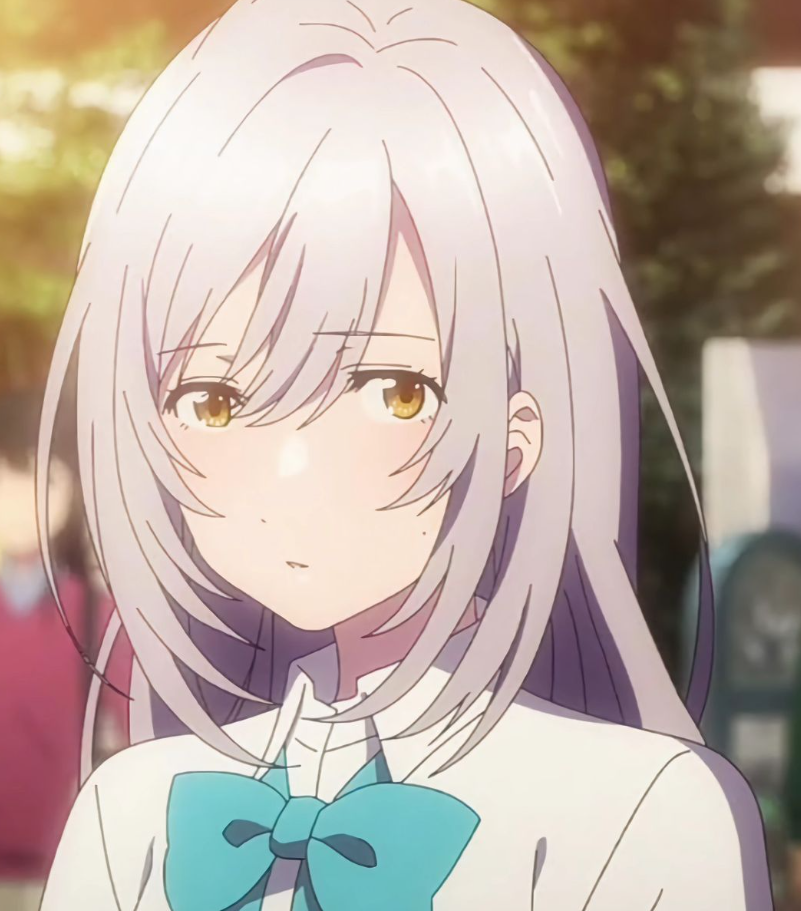
Hitomi is a slim teenage girl with silver hair that falls to her shoulders and golden-yellow eyes that stand out against her otherwise monochromatic perception of the world. In the grayscale world she experiences, she often wears muted clothing, such as her school uniform or simple dresses, adding to her understated and melancholic appearance.
When glimpses of color return to her vision, her expressions brighten noticeably, reflecting her inner emotional changes. Her design contrasts subtly with the vibrant backgrounds of the series, symbolizing her gradual journey back toward emotional vibrancy.
Personality
Hitomi is introverted, gentle, and emotionally reserved, often struggling to express her feelings openly. Her inability to see color has left her feeling detached and isolated, making it difficult for her to engage with others or find joy in her surroundings. She tends to avoid burdening others with her sadness and prefers to keep to herself, even when she craves connection.
Despite her initial shyness and reluctance, Hitomi is kind-hearted, empathetic, and sensitive to the feelings of those around her. Through her relationships in the past, she slowly opens up, revealing a curious, warm, and artistic side that had been dormant. Her growth is defined by small but significant moments of vulnerability and courage, making her transformation deeply moving.
Role in the Story
Arrival in the Past: Hitomi is transported 60 years into the past, arriving in the era when her grandmother, young Kohaku, was still a high school student. There, she is taken in by Kohaku’s friends and introduced to the Photography and Art Club, where she meets a group of creative teenagers who slowly chip away at her emotional barriers.
Building Connections: Through her involvement with the club and her friendships with Yuito Aoi, Asagi Kazeno, and others, Hitomi begins to rediscover emotional expression. Yuito’s artwork, in particular, stirs something inside her, briefly allowing her to see colors again for the first time in years. These interactions encourage her to face her fears and embrace vulnerability.
Emotional Awakening and Return: As Hitomi grows closer to Yuito and her friends, she realizes that relationships and emotions are worth the risk of pain. Ultimately, she must return to her original time, but her journey leaves her stronger, more open, and more hopeful. By the end of the series, Hitomi regains her ability to see the full spectrum of color, symbolizing her emotional healing and newfound appreciation for life.
Relationships
Yuito Aoi: An aspiring artist whose paintings have a profound effect on Hitomi. Yuito’s emotional struggles mirror her own, and their bond grows into a quiet, tender affection. His work allows Hitomi to momentarily see color, and their relationship becomes a cornerstone of her emotional recovery.
Kohaku Tsukishiro (Young and Elder): Young Kohaku is a lively and energetic counterpart to Hitomi’s reserved nature. Her exuberance helps draw Hitomi out of her shell. Elder Kohaku orchestrates Hitomi’s journey to the past, hoping it will heal her granddaughter’s emotional wounds.
Photography and Art Club Members: Hitomi becomes close to several other students, including Asagi Kazeno, Sho Yamabuki, Kurumi Kawai, and Chigusa Fukasawa. Their friendship and creative endeavors help Hitomi reconnect with emotions and belonging, playing critical roles in her healing process.