
Albert James Moriarty
Albert James Moriarty |
|
|---|---|
 |
|
| Kanji | アルバート・ジェームズ・モリアーティ |
| Romaji | Arubāto Jēmuzu Moriāti |
| Aliases | M (formerly) Al (by James Bonde, Mycroft Holmes) |
| Personal Information | |
| Birthday | May 9th, 1852 |
| Age | 27 (pre-timeskip) 30 (post-timeskip) |
| Gender | Male |
| Nationality | British |
| Professional Status | |
| Affiliation | William James Moriarty MI6 |
| Debut | |
| Manga | The Scarlet Eyes |
| Anime | The Earl’s Crime |
| Portrayal | |
| Japanese VA |
|
| English VA | Chris Guerrero |
Appearance
Albert is a tall man, standing at 188 cm, with pale skin and a slender build. He has sharp green eyes and brown hair styled with parted, swept-back bangs that extend slightly down the back of his neck. His usual attire consists of a dark green three-piece suit, complemented by a matching green tie and a neatly folded white pocket square.
Following his three-year confinement in the Tower of London, Albert appears noticeably thinner, and his hair has grown longer. Upon reuniting with his allies, he adopts a more relaxed style by tying his hair back into a ponytail. Despite these changes, he continues to wear his signature dark green suit.

Appearance in Anime
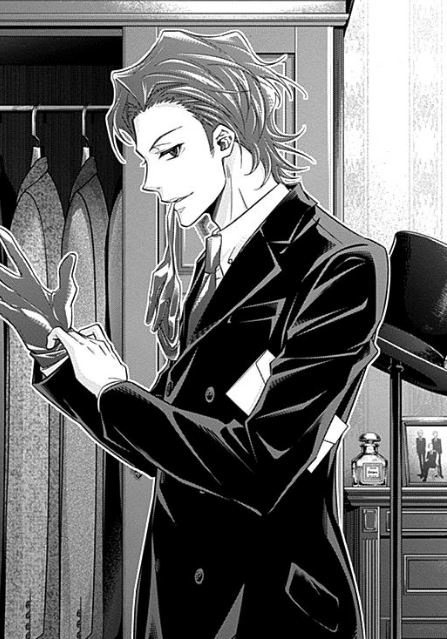
Appearance in Manga
Personality
Albert is a compassionate and principled man who grew to resent his noble upbringing due to the aristocracy’s cruel treatment of commoners. From a young age, he displayed a sense of justice and empathy, often visiting and supporting a local orphanage despite his family’s disapproval. Unlike many of his peers, Albert held strong beliefs about social equality and sought to change the oppressive class system from within.
He is known for his respectful and approachable attitude, often earning the trust and admiration of his allies. His natural charisma and refined appearance frequently attract attention, with noble families extending invitations to social gatherings and women vying for his attention even after he renounced his noble title.
However, beneath his kind exterior lies a deep intolerance for corruption and injustice. Albert is willing to resort to extreme measures, including violence, to achieve his ideals. This was most evident when he murdered his own family to protect his adoptive brothers, William and Louis, from further abuse.
Though not related by blood, Albert holds a profound bond with William and Louis. He is deeply devoted to William’s vision of dismantling the rigid class system and uses his influence and resources to support their revolutionary cause. Inspired by William’s ideals, Albert becomes a key force behind the movement.
Following William’s presumed death, Albert is consumed by guilt for having drawn him into a life of crime. He views his actions as the origin of their suffering, leading him into a cycle of self-blame. Upon William’s return, their reunion brings emotional closure, as William reassures him that Albert has always been a source of strength. Reinvigorated by their bond, Albert resolves to live on with his companions and seek redemption for his past.
Origin
Albert James Moriarty is inspired by the lesser-known brother of Professor James Moriarty, who was briefly mentioned in Arthur Conan Doyle’s original Sherlock Holmes stories. In The Final Problem, Moriarty’s brother is referred to as a colonel, while in The Valley of Fear, a later story, he is described as a station master an inconsistency often considered a retcon.
The Moriarty the Patriot series adopts the “two brothers” interpretation to reconcile these contradictions, portraying Albert as the eldest of the Moriarty siblings and aligning him with the colonel referenced in The Final Problem. His character is developed beyond Doyle’s brief mentions, serving as a major architect behind the creation of the Lord of Crime and the ideological movement that challenges the British class system.
Relationships
William James Moriarty: Though not related by blood, Albert considers William his true brother and plays a pivotal role in supporting his vision of dismantling the British class system. Deeply inspired by William’s ideals, Albert provides him with the resources, strategy, and influence needed to build the Lord of Crime persona. Their bond is central to the story, and Albert’s sense of guilt over involving William in a life of crime becomes a major emotional conflict. After William’s return, the two reaffirm their familial bond, with William acknowledging Albert as a vital source of strength.
Louis James Moriarty: Albert shares a protective relationship with Louis, viewing him as a younger brother. After rescuing both William and Louis from an abusive orphanage, Albert arranged for their adoption into the Moriarty family. He supports Louis unconditionally and respects his role in the group, often placing his well-being above all else.
Moran: As a key member of the Lord of Crime’s inner circle, Moran works closely with Albert. The two share mutual respect, particularly due to their shared background in the military. Albert often serves as a strategist while Moran handles field operations, and they cooperate effectively in executing plans.
Mycroft Holmes: Albert and Mycroft maintain a professional relationship, especially after Albert becomes the head of MI6. Although their ideologies differ, they find common ground in maintaining the stability of the country. Their interactions are marked by mutual acknowledgment of each other’s intelligence and political reach.