
Tughril Mahmut
Tughril Mahmut |
|
|---|---|
 |
|
| Full Name | Tughril Mahmut |
| Alias | Golden Eagle General |
| Personal Information | |
| Birthday | 1 June |
| Birthplace | Tughril Village, Turkiye Stratocracy |
| Gender | Male |
| Eye Color | Baby Blue |
| Hair Color | Blonde |
| Status | |
| Relatives |
Sehir Halil (Adoptive Grandfather) |
| Affiliation |
Triparte Alliance |
| Occupation |
Minister of Foreign Affairs Idare of Chielo Province |
| Base of Operations |
|
| Debut | |
| Anime | #1: The Golden Eagle General |
| Portrayal | |
| Japanese VA |
|
Appearance
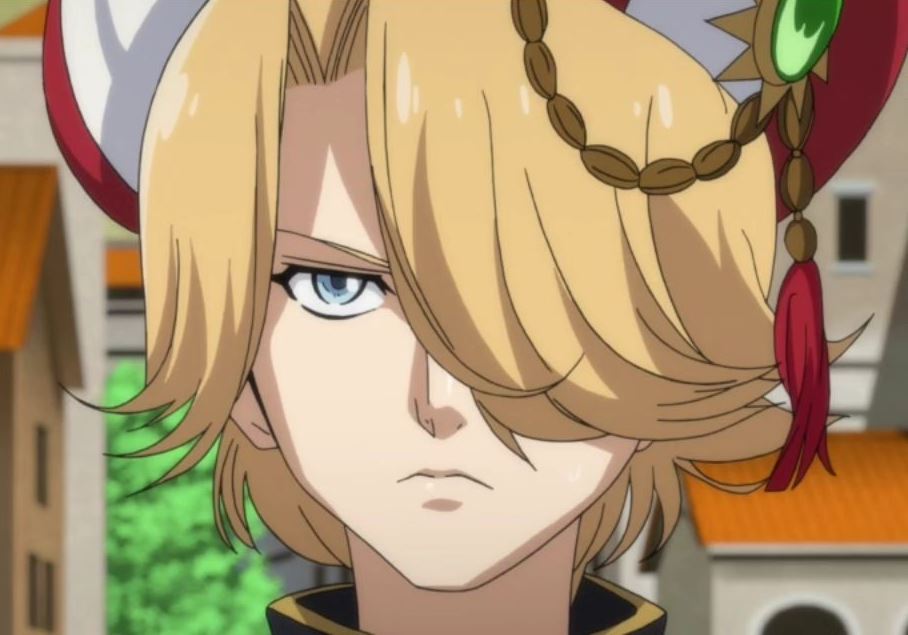
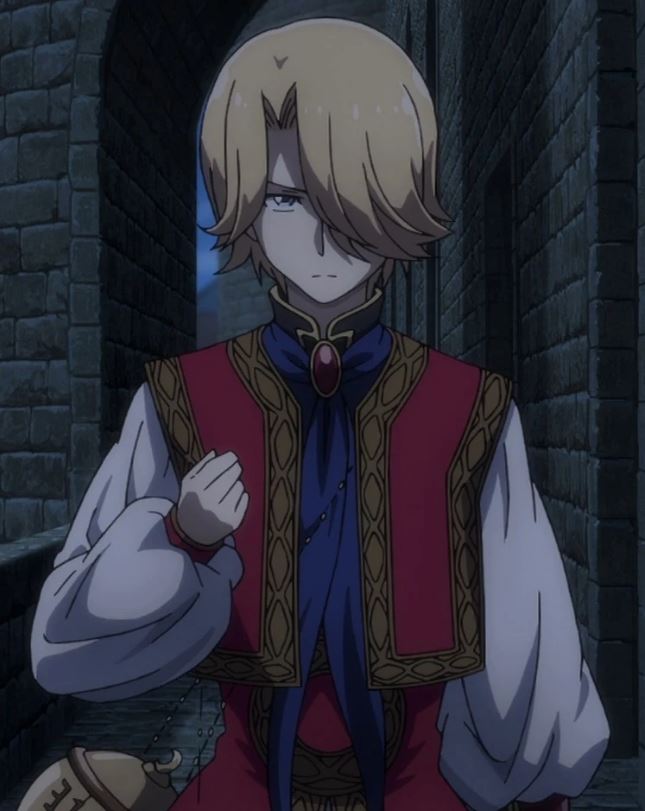
Tughril Mahmut is a fair-complexioned young man of slender build. He has golden blonde hair that reaches his neck, with soft curls at the ends that frame his face, often falling over his left eye. His facial features are delicate and youthful, reflecting both his noble heritage and innocence. He has striking baby blue eyes and a small, defined nose.
Mahmut’s standard attire includes a white şalvar (trousers), a black-collared white inner shirt, a red yelek (short robe), and black çedik (boots). His garments are decorated with circular golden trims, excluding the trousers. On formal occasions, he completes his look with a red and white turban.
Due to his refined appearance, Mahmut is often described as beautiful by other characters at times to the extent that he is able to convincingly cross dress when required. His looks even drew the attention of Sultan Balaban, who considered recruiting him into the yeniçeri (Janissary corps) because of his beauty.
Appearance in Anime
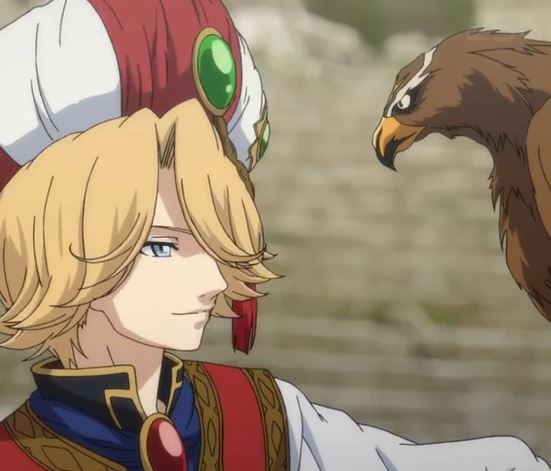
Tughril Mahmut with his loyal eagle perched by his side
Personality
Mahmut is portrayed as a kind-hearted and intelligent young man with a deep sense of justice. However, at the beginning of the story, his idealism is accompanied by a strong impulsiveness that borders on naivety particularly in matters of foreign policy and diplomacy. Despite holding the prestigious rank of pasha, he initially approaches international affairs with a childlike innocence and limited understanding of realpolitik.
As the series progresses, Mahmut undergoes significant personal growth. His experiences in both diplomacy and warfare gradually shape him into a more composed and discerning strategist. While traces of his early naivety remain, he becomes more cautious and thoughtful in his decisions, learning to balance his ideals with pragmatism.
According to creator Katō Kotono, in response to one of the 50 fan questions featured in the official fanbook, Mahmut is described as more of a diligent hard worker than a natural-born genius contrary to the perception held by many characters within the story.
Abilities
Mahmut’s greatest strength lies in his strategic intellect, which has played a crucial role in protecting Türkiye on multiple occasions. His sharp mind and quick thinking allow him to excel in diplomacy, military tactics, and navigating complex political landscapes often turning the tide in seemingly hopeless situations.
While best known for his intelligence, Mahmut is also a capable combatant. He is skilled in the use of various weapons, though not quite at the level of masters like Abiriga. Despite his small stature, he is a highly adept horseman, demonstrated most notably in Chapter 83, where he successfully rides along an extremely steep cliff, an impressive feat even among seasoned riders.
Mahmut’s signature skill, and the one that earned him his title, is falconry. He is frequently seen accompanied by his falcon, Iskandar, whom he has trained since the death of his mother. Mahmut is proficient in using specialized bait and techniques to command large flocks of birds, making falconry not only a symbol of his identity but also a valuable asset in reconnaissance and combat scenarios.
Relationships
Mahmut’s Mother Although she appears only briefly in the story, Mahmut’s mother plays a pivotal role in his emotional foundation and motivations. Their relationship is shown to be loving and affectionate. She sacrifices herself to save Mahmut during the Tughril Massacre, promising to return to comfort him before her death. The loss of his mother and the destruction of his entire village becomes a defining event that fuels Mahmut’s determination to become a pasha and ensure such tragedies never happen again.
Sehir Khalil Sehir Khalil, a senior pasha, adopts Mahmut after the massacre and raises him as his own son. Their relationship is warm and nurturing, with Khalil often offering Mahmut guidance on leadership and judgment. Despite this, Khalil allows Mahmut the freedom to grow and make his own decisions, stepping in only when he feels Mahmut’s impulsiveness might lead to serious consequences. After Khalil’s death, Mahmut hides his grief behind a composed façade, though those close to him recognize his deep sorrow. Later in the series, some members of the Divan view Mahmut as one of Khalil’s ideological successors, though his beliefs have evolved beyond Khalil’s pacifist stance.
Şapka Ibrahim Ibrahim is Mahmut’s closest friend and former classmate from the Military Academy. Their bond begins after a cirit match injury, when Ibrahim helps Mahmut back to the dormitory. Mahmut greatly values their friendship and goes to great lengths to support him especially when Ibrahim is accused of treason by the Divan. Mahmut refuses to believe the accusations and acts swiftly to uncover the truth behind Ibrahim’s decision to declare Hisar independent on behalf of the Araba tribes, demonstrating unwavering faith in his friend’s intentions as a governor.
Zahir Zaganos Mahmut’s relationship with Zaganos evolves significantly over the course of the series. Initially, Mahmut views him as a cold, militant figure and often clashes with him particularly after Zaganos dismisses his proposal for a peaceful resolution during the Franz incident. Their friction continues during the Hisar conflict, where Mahmut openly opposes Zaganos’s forceful strategies. However, after his demotion and a period of self-reflection, Mahmut begins to recognize Zaganos’s exceptional competence and dedication. Over time, Zaganos becomes one of Mahmut’s unconscious role models, alongside Khalil and Süleyman. Still, Mahmut retains his independence and refuses to follow Zaganos blindly, notably during the Civil War arc, when he chooses to resolve the conflict in Acayip on his own terms without Divan approval.
Shara Mahmut first meets Shara during the Sheker Bayram festivities in Altun while visiting with Ibrahim. Despite initially finding her flamboyant personality overwhelming, he engages with her politely. After the celebration, Shara unexpectedly visits his home to return a poetry book he had left behind, an encounter that surprises Mahmut. Their bond strengthens when Shara accompanies him on the mission to Hisar to support their mutual friend Ibrahim. She assists with their disguise and the rescue of Hisar’s citizens from Rod Orm’s forces. Following Mahmut’s demotion, he reunites with Shara in Oasis, where they work together to solve a murder case targeting individuals connected to a dance production. Their interactions suggest a growing camaraderie and mutual trust.
Role in the Story
Tughril Mahmut serves as the central figure in Altair: A Record of Battles, with the narrative closely following his evolution from an idealistic young pasha to a skilled diplomat, strategist, and military leader. At the beginning of the story, Mahmut is the youngest pasha in Türkiye’s history, having earned the title at the age of 17. Initially guided by a desire to protect his homeland from war, his experiences across numerous political and military conflicts shape his worldview and deepen his understanding of the complexities of governance, diplomacy, and warfare.
Early in the series, Mahmut becomes entangled in a conspiracy orchestrated by the Balt-Rhein Empire, which threatens to plunge the continent into widespread conflict. His pursuit of justice leads to clashes with other pashas and a brief fall from grace, during which he is stripped of his title. Despite this setback, Mahmut continues to act independently, traveling across the continent, forming alliances, and assisting in the liberation and stabilization of several regions, including Hisar and Chielo.
His diplomatic efforts and strategic mind play a key role in uniting the various nations of the anti-Balt-Rhein alliance. Over time, Mahmut gains recognition as a significant political figure and is ultimately appointed as the Idare (governor) of Chielo, a position equivalent to that of a vizier. In this role, he not only contributes militarily but also becomes involved in rebuilding war-torn regions, advocating for a balance of power, and promoting cooperation among nations.
Throughout the story, Mahmut remains driven by the trauma of his past and the vow to prevent history from repeating itself. His internal struggle between idealism and realism, as well as his evolving relationships with allies and rivals alike, form the emotional and thematic core of the series.