
Yoshiharu Hisomu
Yoshiharu Hisomu |
|
|---|---|
 |
|
| Japanese | 日染芳春 |
| Rōmaji | Hisomu Yoshiharu |
| Statistics | |
| Gender | Male |
| Hair Color | Purple with muted lavender streaks |
| Eye Color | Gold |
| Affiliation | Kizna Experiment, Sugomori High School (Class 2-A) |
| Debut | |
| Anime | Episode 3 |
| Manga | Chapter 1 |
| Portrayal | |
| Japanese | Koutarou Nishiyama |
| English | Hans Wackershauser |
Yoshiharu Hisomu (日染 芳春, Hisomu Yoshiharu) is one of the main characters in the anime, manga, and novel series Kiznaiver. He is one of the seven individuals selected to participate in the Kizuna System, a government experiment designed to connect people by sharing pain, both physical and emotional. His designated codename within the system is D-7, which is used to identify him when he experiences pain.
Hisomu represents the modern-day sin of “Lust”, and is labeled as “The Immoral” (Japanese: インモラル, Inmoraru) within the group. Eccentric, mysterious, and often unsettling to those around him, Hisomu brings a unique perspective to the Kiznaiver team, as his relationship with pain and emotional detachment contrasts with the vulnerabilities explored by the others.
Appearance
Appearance in Anime
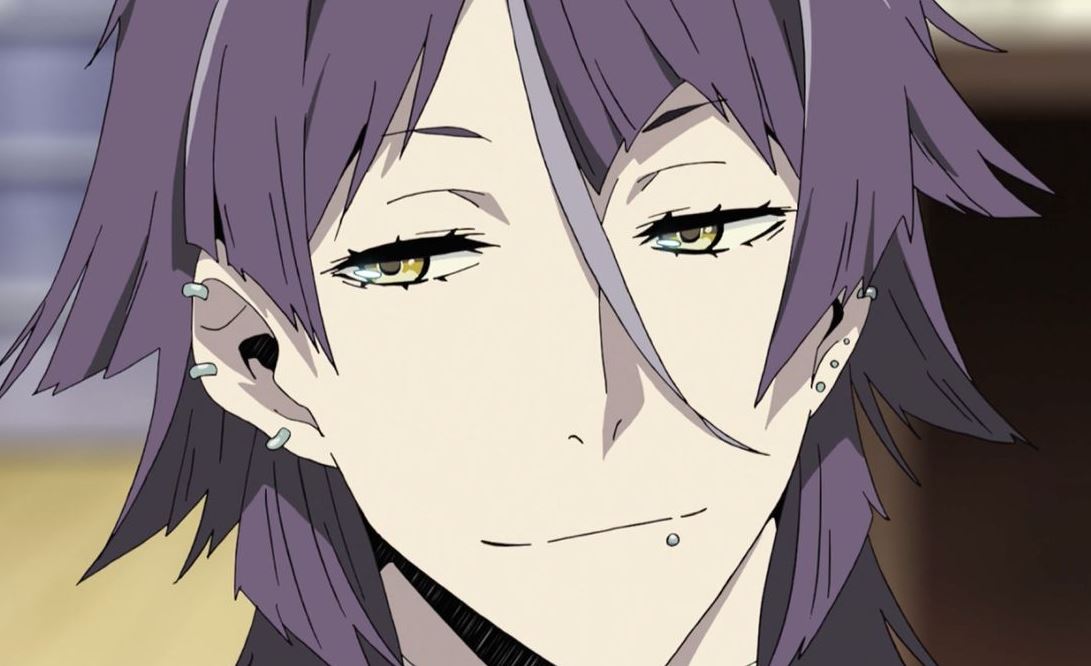
Yoshiharu Hisomu is a naturally handsome yet unkempt teenager, standing at approximately 180 cm (5 feet, 10 inches) tall. He has mid-length, choppy purple taupe hair with subtle grey highlights and golden olive eyes, giving him a distinct and striking appearance. Hisomu is adorned with multiple piercings including several on both ears and a labret piercing beneath his lower lip. A notable and constant feature of his look is the bandages he wears around his neck and wrists, which contribute to his mysterious and slightly chaotic aesthetic.
His clothing is consistently worn-down and tattered, often mismatched and paired with flip-flops, reflecting his indifference toward personal grooming or social norms. Despite this disheveled and careless appearance, Hisomu is frequently described as a “natural hot guy”, in contrast to Tsuguhito Yuta, who maintains his looks through effort. His unconventional charm does not go unnoticed—he is often checked out by passersby, whether walking through the streets or during his rare appearances in class.
Personality
Yoshiharu Hisomu is portrayed as an eccentric and unapologetic masochist throughout the Kiznaiver series. He exhibits a unique and deeply unsettling fascination with pain, finding not only physical but emotional arousal in experiencing or even anticipating it. His open and uninhibited reactions to pain often vocalized with pleasure frequently disturb the rest of the group, particularly Tsuguhito Yuta, who is visibly uncomfortable with Hisomu’s inappropriate and erratic behavior. Ironically, Hisomu seems ideally suited to the Kizuna System, a project designed to connect individuals through shared pain something that is inherently uncomfortable for most, but perversely enjoyable to him.
There are subtle implications in the narrative that Hisomu may have been suicidal, although he never acknowledges this with seriousness or concern. Like many aspects of his personality, he seems to treat the idea with emotional detachment, viewing it neither as a problem nor something requiring resolution.
When interacting with Nico Niiyama, Hisomu sometimes displays a more playful, childish side. Their eccentric personalities often amplify one another, creating moments of strange but humorous energy within the group. However, beneath his seemingly carefree exterior, Hisomu occasionally reveals unexpected vulnerabilities. He confides in Hajime Tenga that he cannot swim and has no desire to drown an admission that sharply contrasts his otherwise fearless approach to pain. This suggests that there may be specific forms of suffering he does fear or avoid, though it remains unclear whether this stems from past trauma or suppressed memories, as Hisomu appears to have deliberately shut out all emotions except those tied to pain.
Beyond these glimpses, Hisomu remains largely an enigma, both to his peers and even the former Kizna Committee members, who monitored him closely. Despite often smiling innocently and presenting a harmless facade, he can be surprisingly blunt, emotionally detached, and ruthlessly honest, which occasionally unnerves the other Kiznaivers. His unpredictable mix of passivity, intensity, and ambiguity makes him one of the most complex and mysterious characters in the group.
Abilities
High Pain Endurance
Hisomu possesses an exceptional tolerance for physical pain, which he not only endures but actively enjoys, aligning with his masochistic tendencies. His ability to withstand pain is comparable to that of Katsuhira Agata, though their experiences are fundamentally different Katsuhira is numb to pain due to his condition, whereas Hisomu feels every sensation intensely and derives pleasure from it. This trait makes him particularly suited to the Kizuna System, which relies on the transmission and sharing of pain among its subjects. In Episode 9, when the Kiznaivers begin to hear each other’s thoughts, Hisomu is notably one of the only two members alongside Katsuhira who remains composed and able to speak, further highlighting his mental and physical resilience.
Intelligence
Although his eccentric behavior often overshadows it, Hisomu demonstrates a sharp and observant mind. Much like Hajime Tenga, he is capable of quickly analyzing situations and drawing accurate conclusions based on the available information. He adapts well to sudden changes and understands complex emotional dynamics between the group members, though he doesn’t always respond in a conventional or socially expected way. Despite his unpredictable exterior, Hisomu’s intellect plays a key role in how he navigates the group’s evolving relationships and the psychological aspects of the Kizuna experiment.
Relationships
Katsuhira Agata
Katsuhira is one of the fellow Kiznaivers to whom Hisomu is connected through the Kizuna System. Hisomu immediately takes a keen interest in Katsuhira upon their first meeting in Episode 3, intrigued by Katsuhira’s unique insensitivity to pain a contrast to Hisomu’s own heightened experience of it. As the story progresses, Hisomu becomes one of the few individuals who openly supports Katsuhira, particularly during the emotionally turbulent periods within the group. After they begin living together, Hisomu also becomes a confidant and steady presence for Katsuhira. Their bond remains consistently friendly and stable throughout the series, marked by mutual understanding and emotional support.
Nico Niiyama
Nico and Hisomu share a friendly and eccentric dynamic, both being connected through the Kizuna System. Although Nico jokingly calls him a “scallywag” and attempts to out-weird him early on, she appears to genuinely want to befriend him. Their quirky personalities mesh in unexpected ways, and they are among the first to express a desire to maintain their friendship with Katsuhira beyond the confines of the Kiznaiver experiment. By the end of the series, Hisomu is shown spending time alone with Nico, observing her thoughtful interactions and remarking that she is actually quite mature, a comment that reflects his growing respect for her.
Noriko Sonozaki
Noriko serves as the administrator of the Kiznaiver experiment, yet unlike the others, Hisomu harbors no resentment toward her. In fact, he seems to view her in a somewhat positive light, acknowledging that she was the one who selected him to join the experiment, thereby giving him the opportunity for greater emotional and physical stimulation. His interactions with Noriko are blunt yet polite, maintaining a level of courtesy consistent with how he treats most people, but with a hint of respect for her role in his experiences.
Tsuguhito Yuta
Hisomu’s relationship with Yuta is strained and awkward. Hisomu’s tendency to behave childishly and invade personal space, often sitting uncomfortably close, deeply bothers Yuta, who finds him creepy and off-putting. Their dynamic remains tense throughout the series, especially after Episode 8, when Yuta openly expresses disapproval of Hisomu for hurting Maki for his own amusement. Hisomu shows little concern for Yuta’s opinion, and their relationship does not improve by the series’ conclusion.
Honoka Maki
While Hisomu shares little direct dialogue with Maki for most of the series, he carefully observes her behavior and chooses a critical moment during a storm to confront her emotionally. In response to Maki calling him “messed up,” Hisomu turns the situation on her, accusing her of staying close to the Kiznaivers only to soothe her guilt over her past. The remark deeply wounds Maki, prompting her to flee in distress, while Hisomu remains unaffected, taking pleasure in the emotional pain he both observed and contributed to.
Hajime Tenga and Chidori Takashiro
Hisomu maintains a neutral stance toward both Tenga and Chidori, though he appears slightly more comfortable around Tenga. He keeps his distance emotionally, likely due to his perception of their entangled romantic tension, which he finds unappealing or irrelevant. Despite the lack of closeness, Hisomu acknowledges them as friends by the end of the series, recognizing the shared experiences that bound the group together.