
Hitomi Kashiwa
Hitomi Kashiwa |
|
|---|---|
 |
|
| Kanji | 柏瞳 |
| Rōmaji | Kashiwa Hitomi |
| Age: | 22 |
| Birthday: | April 7 |
| Height: | Unknown |
| Voice Actor | |
| Japanese | Sanae Kobayashi |
| English | Luci Christian |
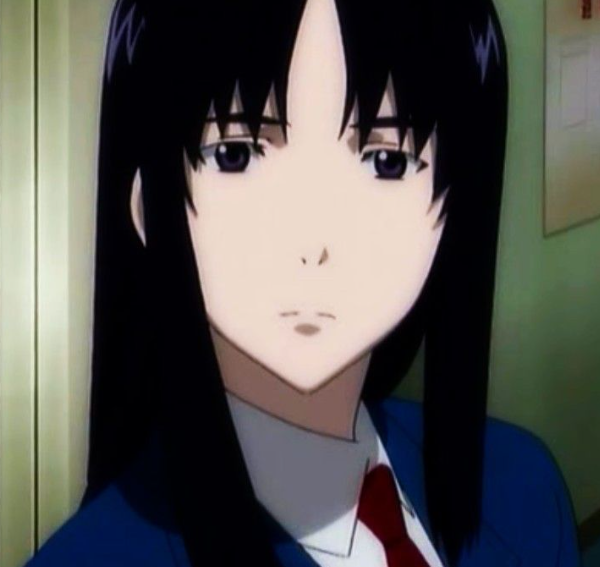
Hitomi Kashiwa (柏 瞳, Kashiwa Hitomi), is a former high school senpai of Tatsuhiro Satou and plays a significant role in Welcome to the NHK! (NHK ni Yōkoso!). She is an intelligent yet emotionally troubled woman who has struggled with existential despair and depression for years. Despite being a seemingly successful adult, she harbors deep dissatisfaction with her life, making her a mirror to Satou’s own struggles with societal expectations and mental health.
Hitomi is also notable for being one of Satou’s earliest romantic and personal connections, having formed a close but ambiguous relationship with him during their high school years. In the manga and light novel, it is strongly implied that they had sexual relations, though the anime adaptation leaves this ambiguous. Later in the story, she becomes the wife of Akira Jougasaki, though her marriage does not provide her with the happiness or fulfillment she hoped for.
Background

Appearance in anime
During high school, Hitomi was a member of the literature club and invited Satou to join, seeing him as a fellow misfit with whom she could share her interests. However, rather than participating in traditional club activities, the two spent most of their time debating conspiracy theories and playing cards, forming a unique and somewhat awkward bond.
Despite her outward intelligence and confidence, Hitomi was already struggling with depression and a sense of detachment from reality, much like Satou. Their relationship was both emotionally intimate and dysfunctional, with neither of them knowing how to express their feelings properly.
By the time high school ended, their relationship faded, and Hitomi went on to pursue a more conventional adult life, eventually getting engaged and marrying Akira Jougasaki. However, despite achieving societal expectations of adulthood, she remains deeply unsatisfied and emotionally lost, making her arc one of disillusionment with adulthood and the struggles of finding true fulfillment.
Appearance
Hitomi has long, dark brown hair, sharp eyes, and a calm, mature demeanor. She often wears glasses, reinforcing her intellectual and refined personality. Her attire consists of formal or semi-casual outfits, reflecting her role as an “adult” figure in contrast to Satou’s disheveled and aimless existence.
However, despite her put-together appearance, her expressions often betray a sense of sadness, boredom, or internal frustration, hinting at her dissatisfaction with life.
Personality
Hitomi is intelligent, articulate, and seemingly composed, but beneath her calm demeanor, she is deeply troubled. She frequently overthinks the meaning of existence, leading her to fall into spirals of anxiety and depression.
She disguises her loneliness with wit and sarcasm, making her appear emotionally detached. However, she craves meaningful human connection, which is why she formed a close bond with Satou in high school and later seeks him out as an adult.
One of her defining traits is her obsession with conspiracy theories, which she uses as a coping mechanism to escape the meaninglessness she feels in life. Her philosophical musings and existential despair make her one of the most psychologically complex characters in the series. Despite being married and seemingly successful, she is disillusioned with adulthood, showing that simply following societal norms does not guarantee happiness.
Role in the Story
-
Satou’s High School Connection
In high school, Hitomi was one of the few people who interacted with Satou, though their relationship was more about shared isolation than genuine romance. She invited him to the literature club, but instead of bonding over books, they spent their time indulging in conspiracy theories and philosophical discussions. In the manga and light novel, their relationship takes a more physical turn, implying that they had sexual relations before parting ways. However, in the anime adaptation, their intimacy is left ambiguous, with only hints in flashback scenes suggesting they might have been involved romantically. Regardless of their past, Hitomi represents a significant figure in Satou’s life, being one of the first people to share in his feelings of disillusionment and existential crisis. -
Reuniting as Adults: The Suicide Pact Incident
Years later, Hitomi and Satou reconnect when she invites him to a group trip to the countryside, intending to introduce him to her fiancé, Akira Jougasaki. However, Satou quickly realizes that Hitomi is still struggling with depression and dissatisfaction with life, despite her engagement. During this trip, Hitomi reveals her suicidal thoughts, admitting that she feels trapped in a meaningless cycle and has joined an online suicide group. She attempts to convince Satou to join her and the group in a suicide pact, believing that they can escape their suffering together. At the peak of the suicide attempt, Satou has a moment of realization, choosing to break free from his own self-destructive mindset and stop Hitomi from going through with it. This marks a turning point for both of them, as Satou begins to understand the serious consequences of his own nihilism, while Hitomi is forced to confront her fears and unhappiness head-on. Despite the dark nature of their reunion, this moment cements Hitomi’s role as a critical figure in Satou’s journey, as her struggles reflect what Satou himself could become if he never attempts to improve his life. -
Marriage to Akira Jougasaki and Disillusionment with Adulthood
Following the failed suicide pact, Hitomi eventually marries Akira Jougasaki, hoping that a traditional, stable life will bring her happiness. However, even after marriage, she continues to struggle with dissatisfaction, proving that fitting into society’s expectations does not necessarily lead to personal fulfillment. Her story arc serves as a harsh critique of adulthood, showing that even those who seem successful on the surface may still feel empty inside.
Relationships
Tatsuhiro Satou
Satou’s former senpai and one of the first people to connect with him over existential struggles. Their relationship is a mix of nostalgia, regret, and emotional tension, as they both represent what the other fears becoming.
Akira Jougasaki
Her husband, whom she marries in an attempt to achieve stability and happiness. However, their relationship remains emotionally distant, as Hitomi still struggles with her existential crisis.
Suicide Group
A group of disillusioned individuals Hitomi briefly associates with, highlighting her deep desire to escape her perceived meaningless life.